
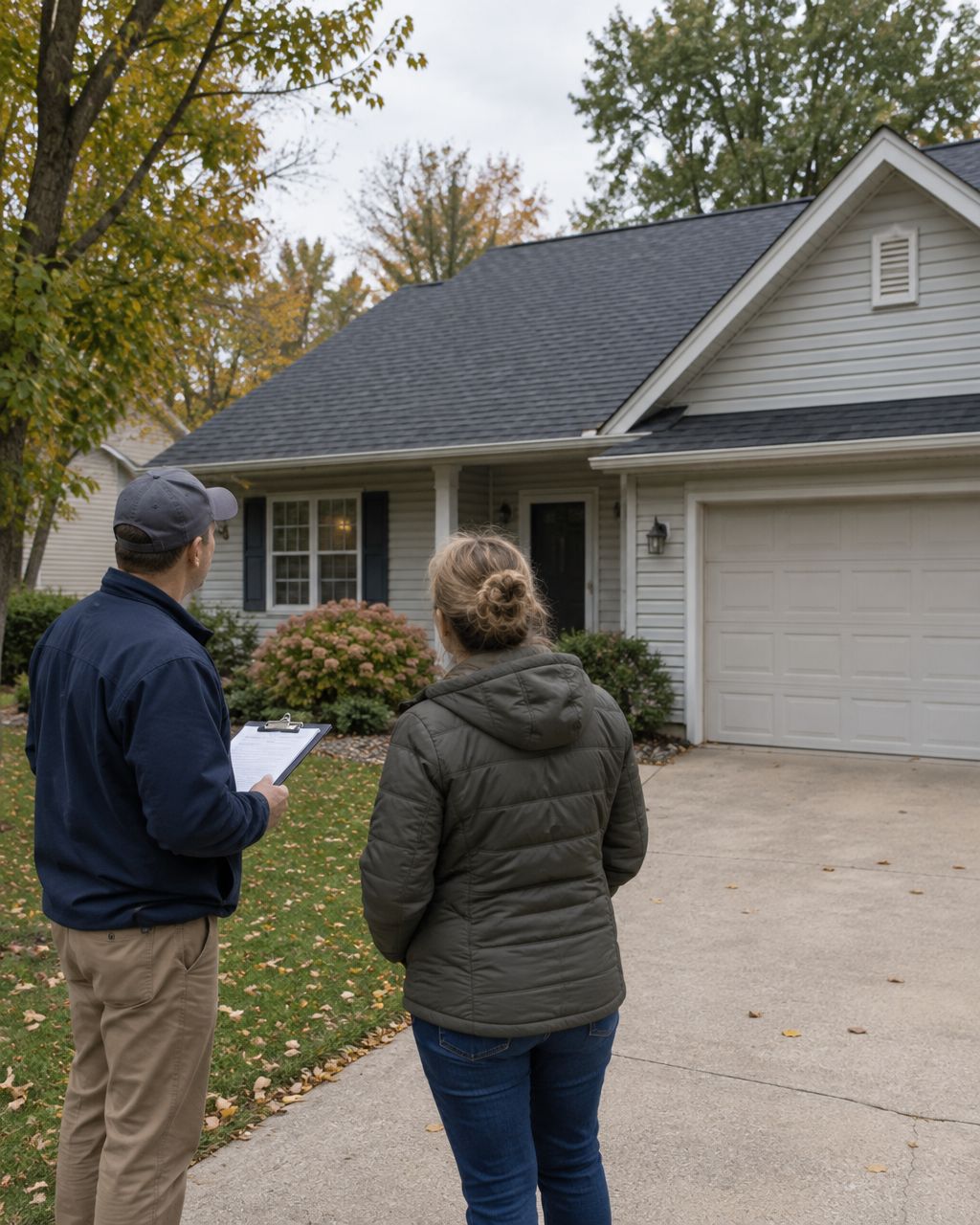
Compare roofing quotes in Eau Claire by matching the work included before comparing the totals. Ask each contractor to identify the roofing product, removal work, hidden-damage process, water protection, ventilation, cleanup and warranty responsibilities in writing. A lower total is only useful when you understand what it leaves out.
- For roofing Eau Claire projects, compare the same written scope before choosing a contractor.
- Ask which removal, flashing, ventilation and cleanup tasks are included rather than assuming they are standard.
- Keep product warranties separate from the contractor's workmanship coverage.
- Liberty Exteriors serves Chippewa Valley homeowners who value local experience and detailed installation planning.
How to compare roofing quotes in Eau Claire
Start with a side-by-side checklist, not a stack of totals. For a roofing project planned in 2026, request a written proposal that describes the work on your particular house. A generic description such as replacing the roof does not tell you how the contractor plans to handle chimneys, wall intersections or damaged wood.
Use these steps to make the proposals comparable:
- Confirm that every quote covers the same roof sections and buildings.
- Identify the exact roofing product and installation approach.
- Check removal, disposal and protection of your property.
- Ask how damaged roof decking will be documented and approved.
- Compare flashing, water barriers and ventilation details.
- Read the warranty, payment and change-approval terms.
Liberty Exteriors' Eau Claire roofing service information describes preparation, water-protection details and job-site cleanup. Use that level of detail as a starting point for questions, then confirm the scope for your own home in the written quote.
A checklist for your quote comparison
| Part of the proposal | What you should find | What to ask if it is missing |
|---|---|---|
| Roofing material | Product name, profile and agreed finish | Which exact product is included? |
| Existing roof | Removal or reuse approach | What stays, what comes off and why? |
| Roof decking | Inspection and repair process | How will you show me damage and get approval? |
| Water protection | Underlayment, edges, valleys and flashing | Which details are included for this house? |
| Ventilation | Assessment and proposed work | What changes are included, if any? |
| Property protection | Access, landscaping and debris handling | Where will equipment and waste go? |
| Cleanup | Nail collection, disposal and final walkthrough | Who checks the yard and gutters? |
| Warranty | Product and workmanship terms | Who handles a problem after installation? |
An unanswered item is a question to resolve, not automatic evidence of poor workmanship. Give each contractor the opportunity to clarify it in writing before you decide.
Why the written scope matters
Your roof has more places to manage water than the large surfaces you see from the street. Valleys, eaves, chimneys and the points where a roof meets a wall need attention too. A material name alone does not explain how those areas will be handled.
The useful comparison is the same work, on the same house, with the same responsibilities. Otherwise, one proposal might include removal and detailed repairs while another assumes that much of the existing work will stay in place. Those are different projects, even when both are described as a new roof.
Treat your 2026 quotes as working documents until the open questions are answered. Keep the revised versions together so that an earlier conversation does not become the only record of an important promise.
Confirm the product before comparing the installation
Ask for the product name and roof profile rather than a broad label such as shingles or metal. Material appearance, attachment details and the requirements of the chosen system all belong in the conversation. A sample can help you judge appearance, but it does not replace a written product description.
Liberty Exteriors' quote form lists fiberglass/asphalt shingles, metal shingles and standing seam steel panels among its roofing interests. That gives homeowners a way to explain what they want to discuss; it does not establish which option suits every roof. Ask for an assessment of your house before treating any material as the default.
If you are considering more than one roof type, separate the material decision from the contractor decision:
| Option to discuss | Best for your comparison when | Trade-off to clarify |
|---|---|---|
| Asphalt shingles | You want to evaluate a shingle-style roof | Exact product, removal scope and installation details still need confirmation |
| Metal shingles | You want to discuss a metal roof with a shingle-style appearance | Profile and detailing need to be compared with the actual proposal |
| Standing seam steel panels | You want to evaluate a vertical-panel appearance | Panel layout, attachment and roof transitions require a specific plan |
These are discussion points, not a ranking. Choose the product that fits your house and preferences after the installer explains the work and limitations. No material name makes an incomplete quote complete.
Ask what happens underneath the new roof
The roof decking is the supporting surface underneath the roof covering. Its condition is not always fully visible before work begins, so ask how the contractor handles discoveries after removal. The answer should cover documentation, authorization and how the change will be reflected in the project agreement.
For example, ask whether the crew will photograph a deteriorated area and explain the proposed repair before proceeding. Then ask who contacts you if you are away from home. A practical communication plan is more useful than a vague promise to take care of anything that comes up.
Before signing a 2026 proposal, resolve these points:
- Which existing layers are being removed or retained?
- How will the supporting surface be inspected?
- What repairs are already included?
- How are additional repairs described and approved?
- Who is authorized to approve a change on your behalf?
Do not assume an allowance covers every possible problem. Ask the contractor to explain both the allowance and its limits in ordinary language.
Compare the details that manage water
Flashing is the material used to direct water away from joints and transitions. Underlayment and water barriers sit beneath the visible roof covering. Ask your contractor to explain how these parts fit together on your house instead of accepting a list of unfamiliar product names.
Liberty Exteriors describes valley protection, eave protection and step flashing at roof-to-wall intersections on its roofing page. Those are useful examples of installation details worth discussing. Your own quote should identify the applicable work, including anything that is being reused rather than replaced.
Bring attention to the places that are easiest to overlook:
- Roof valleys where slopes meet.
- Chimneys and the surrounding transitions.
- Dormers and adjoining walls.
- Pipes and other roof penetrations.
- Eaves, roof edges and gutter interfaces.
Ask the installer to mark these areas on photos if that makes the explanation clearer. You should leave the conversation knowing what is planned, not simply remembering that the contractor used technical terms.
Keep ventilation separate from vague energy promises
Ask whether the quote includes an assessment of existing ventilation and what work follows from it. If the contractor proposes changes, request a plain explanation of the problem being addressed. Do not treat a ventilation line item as proof of a particular reduction in heating or cooling bills.
A useful 2026 proposal distinguishes roof work from other work the house might need. If the assessment points to an attic or insulation concern outside the roofing scope, ask for that boundary in writing. Knowing what is excluded helps you plan instead of discovering the gap during installation.
Check how the crew will protect and leave your property
The work does not stop at the roof edge. Ask where materials will be placed, how the crew will access the house and where debris will be collected. Mention gardens, driveway concerns, pets and the entrances your household needs to use.
Liberty Exteriors describes landscaping tarps, daily magnet runs for nails, disposal equipment and gutter cleaning as part of its approach. Confirm which protection and cleanup measures are included for your project. A website description is helpful context, but the signed agreement should make the responsibilities clear.
Agree on a final walkthrough. Ask who checks for remaining debris, how you report a concern and whom you contact once the crew leaves. These questions are straightforward and deserve straightforward answers.
Read product and workmanship warranties separately
A product warranty and a workmanship warranty address different responsibilities. Ask for the actual written terms for the proposed product and the contractor's work. Do not compare warranties by the largest number printed on the proposal.
Read for the details that affect how you would use the coverage:
- Who provides each warranty?
- What is covered and what is excluded?
- What documentation should you retain?
- Are there registration or maintenance requirements?
- What happens if you sell the house?
- Who should you contact first about a concern?
Do not apply a warranty from another service to roofing. A siding workmanship statement, for example, does not establish the coverage on a roof installation. Ask for roofing-specific terms rather than filling in the gaps yourself.
Why roofing quotes differ from house to house
Two nearby houses can require different work. Ask the contractor to identify the features of your home that shaped the proposal, without expecting a generic online estimate to settle the question.
Common scope differences to discuss include:
- Roof layout: slopes, valleys and transitions affect the work plan.
- Existing materials: removal and disposal depend on what is already there.
- Supporting wood: repair needs change the agreed scope.
- Access: equipment placement and property protection need planning.
- Product choice: the chosen roof system determines its installation details.
- Related work: ventilation, flashing and gutter interfaces need clear boundaries.
The right follow-up is not simply asking why one total is higher. Ask which tasks or assumptions account for the difference, then request matching scope where that makes sense.
How do you choose after the quotes are clarified?
Choose the proposal you can understand and the contractor who can explain it without pressure. Check the written scope, exclusions, warranty responsibilities and communication plan together. Do not let a short deadline replace answers to unresolved questions.
Liberty Exteriors has served the Chippewa Valley since 1984. For homeowners comparing roofing in Eau Claire, that local history is a reason to start a conversation, not a substitute for reviewing the proposal. A suitable contractor should connect experience to the actual work your home needs.
When you request a roofing quote, describe the building, your concerns, the materials you are considering and your preferred timeframe. Photos and a clear description can help frame the discussion. The goal is a proposal built around your house rather than a generic sales pitch.
FAQ
What should I compare first in roofing quotes?
Compare the written scope first. Confirm the roof sections, product, removal work, repair process and installation details before comparing totals.
Is the lowest roofing quote the best choice?
The lowest quote is only comparable when it covers the same work. Ask what is excluded and resolve missing details in writing before choosing.
Should a roofing quote include wood repairs?
A roofing quote should explain how wood repairs will be handled. Ask what is included, how newly discovered damage is documented and how additional work is approved.
Are product and workmanship warranties the same?
Product and workmanship warranties are separate forms of coverage. Read the terms for each and confirm who handles a claim or installation concern.
Can I compare a metal roof quote with a shingle quote?
You can compare them as different project options, but they are not identical scopes. Ask each contractor to explain the product, installation approach and limitations for your house.
What should I tell an Eau Claire roofing contractor before getting a quote?
Describe the property, the problems you have noticed, your material preferences and your timeframe. Mention access concerns and other exterior work you are considering.
One last thing
Before approving your 2026 roofing project, ask the contractor to walk you through what is not included. Exclusions often reveal the most useful follow-up questions. Keep the final answers with the agreement so that both sides start with the same expectations.