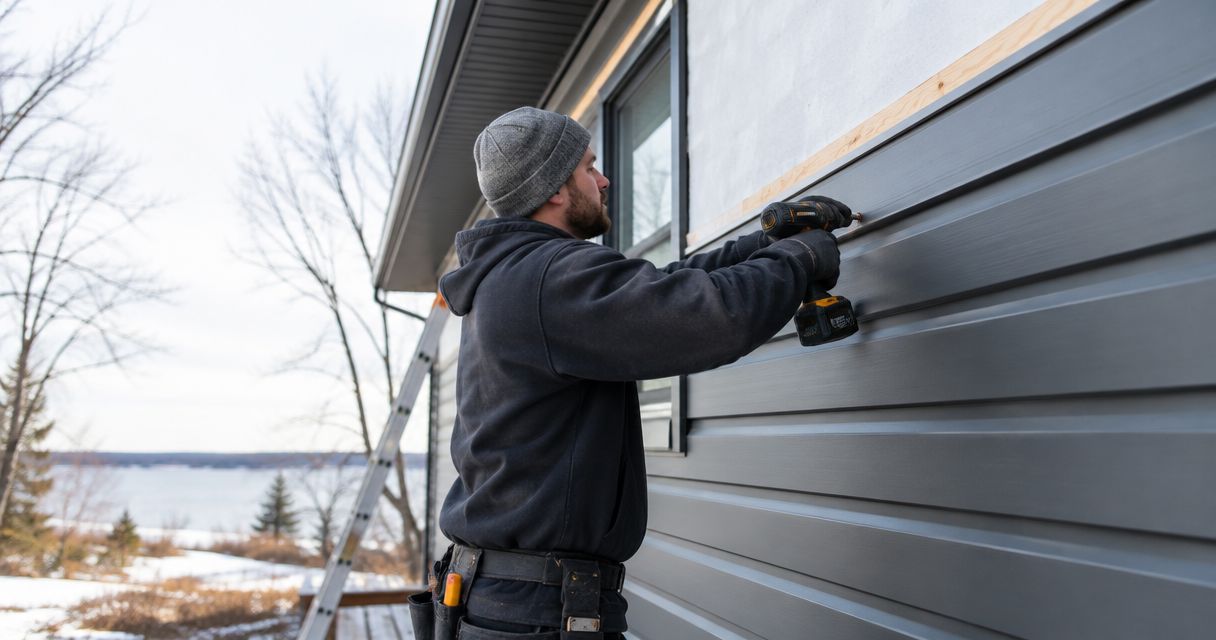
Steel siding installation is right for your Wisconsin home if you want a noncombustible siding material and accept that panels can dent and damaged finishes need attention. The decision also depends on the wall underneath: siding cannot fix concealed rot, poor flashing or a water-entry problem simply by covering it.
- Steel siding installation offers noncombustible cladding, but denting and finish damage remain trade-offs.
- Liberty Exteriors provides siding installation for homeowners in Eau Claire, the Chippewa Valley and west central Wisconsin.
- Compare wall preparation, flashing and repair details before choosing an exterior siding material.
- For a 2026 project, separate the product warranty from the workmanship warranty before signing.
Why this matters: New siding changes how your house looks, but the less visible details determine how water gets out of the wall assembly. Choose the material and the installation scope together, rather than approving a color first and discussing repairs after work begins.
Liberty Exteriors has served the area since 1984 and provides siding and other exterior installation services. For your 2026 project, start with the condition of your home and the work it needs, not a promise that any siding is maintenance-free.
Is steel siding installation right for your Wisconsin home?
Steel siding is a good fit when you value a noncombustible exterior covering and are comfortable checking the finish for damage. It is a weaker fit when avoiding visible dents is your main concern or when you expect the siding alone to solve insulation and moisture problems.
Use this comparison to identify the trade-off you are willing to accept. These are material-level distinctions; the selected product and its installation instructions still control the details.
| Siding option | Best for | Main advantage | Main limitation |
|---|---|---|---|
| Steel siding | Homeowners prioritizing noncombustible cladding | Steel itself does not burn or rot | Panels can dent; exposed steel needs attention if its protective finish is damaged |
| Vinyl siding | Homeowners who want siding that does not require routine painting | Its color does not depend on a field-applied paint coating | It can crack under impact and must accommodate temperature-related movement |
| Fiber cement siding | Homeowners who want a painted exterior without wood siding | The material does not rot like wood | Finish upkeep and careful cutting, fastening and clearance details remain necessary |
Choose steel for its material properties, not because someone calls it indestructible. Hail, ladders and other impacts can leave visible damage. Ask how a damaged panel would be replaced and how closely a later replacement would match the surrounding wall.
No siding choice removes the need for sound flashing, suitable fasteners and drainage behind the cladding. Those requirements belong in the installation discussion before you sign.
Steel siding: choose it for the right reasons
Steel siding gives you a noncombustible outer covering that does not rot. That is a useful distinction from wood, but it does not make the entire wall assembly fireproof or eliminate every maintenance task.
The protective finish matters because exposed steel can corrode. Ask which finish the proposed product uses, what the manufacturer requires for cleaning and how scratches or cut edges should be treated. Follow the product instructions rather than assuming any touch-up paint is suitable.
Denting deserves a separate conversation. A panel can remain attached and still have damage you notice every time sunlight crosses the wall. Ask the installer to explain repair access at corners, beneath windows and near attached structures.
Also ask to see a physical sample outdoors. Profile depth, surface texture and sheen affect the appearance more than a small color image suggests. Look at the sample against your roof, window frames and doors before making the final selection.
Vinyl and fiber cement: when the alternatives deserve a look
Vinyl deserves consideration when you want an exterior that does not require routine repainting. Its trade-off is movement and impact sensitivity: installation must allow expansion and contraction, and a sharp impact can crack a panel. Ask how the selected profile handles joints and replacement pieces.
Fiber cement deserves consideration when you prefer a painted appearance and accept future finish care. It still needs correct clearances and flashing at rooflines, trim and other transitions. A material that resists rot does not protect adjacent wood from a badly detailed leak.
Do not compare a fully specified steel installation with a loosely described alternative. Ask each contractor to explain removal, wall repairs, drainage details, trim and cleanup. Otherwise, you are comparing different projects rather than different siding materials.
Your existing house should guide the choice. Wall condition, window details and the appearance you want all matter more than a broad claim that one material is best everywhere.
Why steel siding installation requirements vary
The same siding profile does not produce the same installation scope on every house. These factors explain why a contractor needs to inspect the building before defining the work:
- Existing siding: Removal reveals conditions that a surface inspection cannot fully establish. If installation over an existing layer is proposed, ask whether the product instructions permit it and how the wall will be prepared.
- Wall condition: Soft sheathing, uneven surfaces and damaged framing require attention before new panels cover them. Ask how repairs will be identified, documented and approved.
- Water details: Windows, doors, roof intersections and wall penetrations need coordinated flashing. New siding must work with those details rather than conceal failed joints.
- Building shape: Corners, gables, attached porches and other interruptions affect panel layout and finishing work. Ask where seams and trim pieces will appear.
- Connected projects: Roofing, replacement windows, doors, gutters, decks and sunrooms can meet the same wall. Their attachment and water-management details need a clear work sequence.
For a 2026 quote, require a written description of these conditions and assumptions. A short line that says only steel siding installation leaves too much room for disagreement about what is included.
Check these 5 inspection points before choosing siding
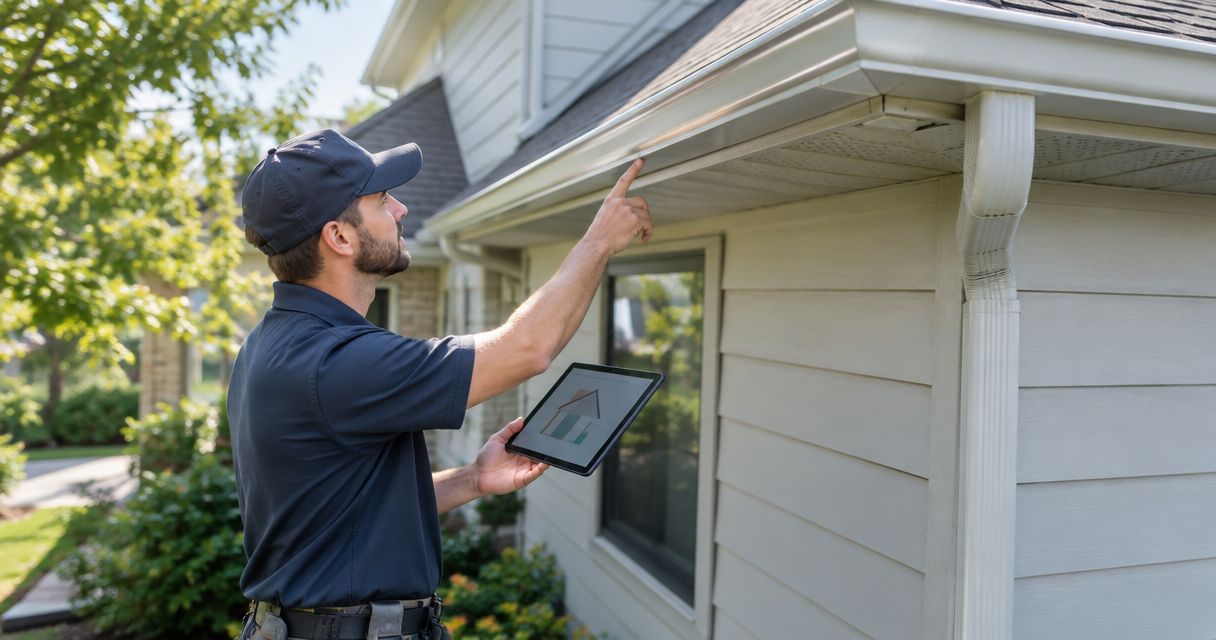
Walk around the house with the contractor and discuss these points in order. Stay on the ground; leave roof access and invasive inspection to the people equipped to do that work.
- Wall condition. Identify visible staining, bulging, loose siding and soft areas the contractor can safely assess. Ask which findings require further investigation and which conditions remain concealed until removal.
- Water entry. Discuss leaks, recurring stains and places where water collects. Describe when you notice the problem, such as during wind-driven rain or snowmelt, rather than assuming the siding is the source.
- Flashing details. Review windows, doors, roof-to-wall intersections and penetrations. Ask what will be replaced, what will remain and how retained components will connect to the new work.
- Panel layout. Discuss seams, corners, trim width and the treatment around openings. Look for places where a layout choice will be especially visible from the street or your main outdoor living area.
- Repair access. Ask how future panel damage would be handled and what information you should keep. Record the product identification, finish and maintenance instructions with your project documents.
These checks connect appearance to construction. A tidy panel layout matters, but it should never require hiding an unresolved leak or ignoring a manufacturer’s clearance instructions.
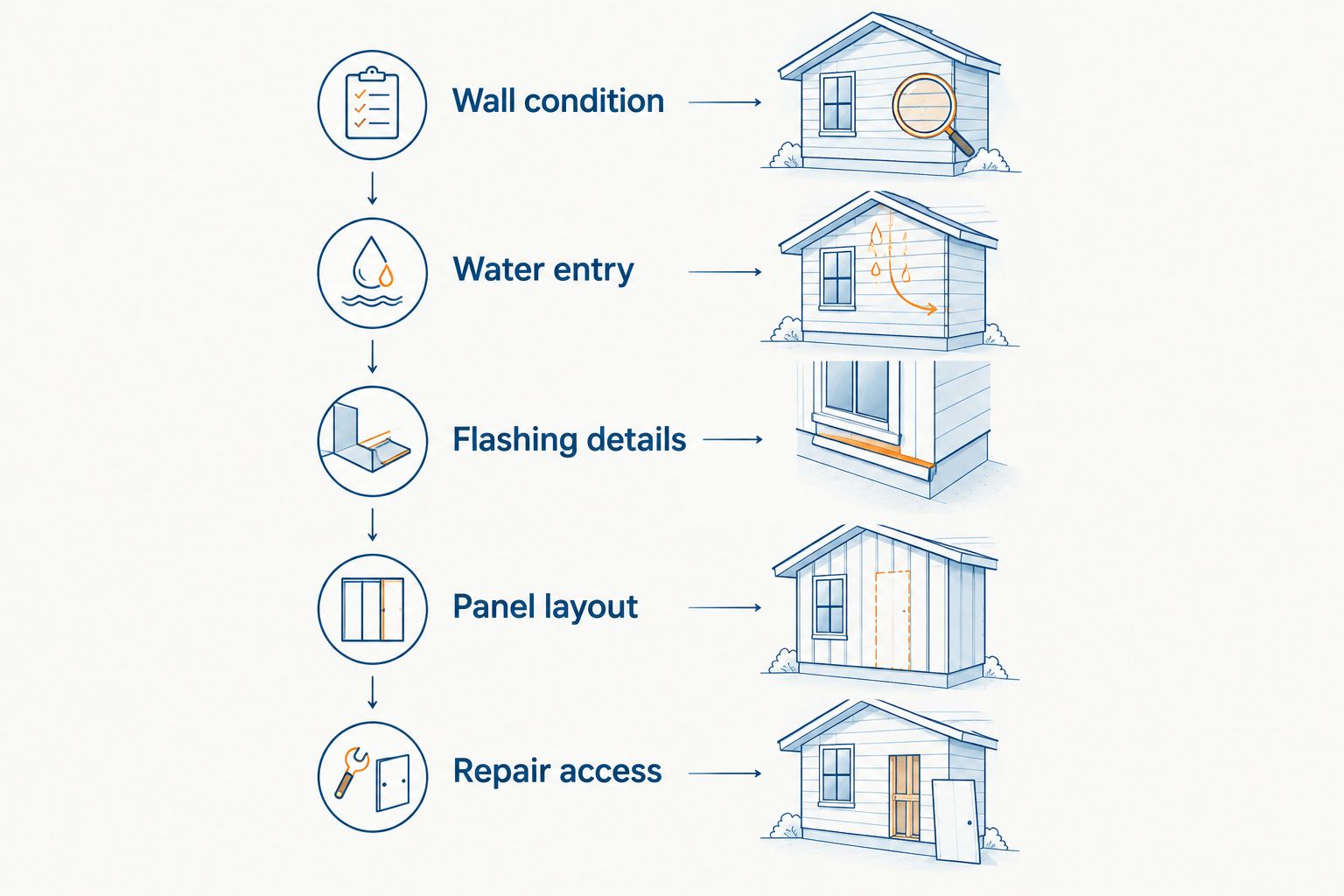
Keep photographs and written notes from the walk-through. They give you a shared reference when reviewing the proposal, especially where an existing deck, sunroom or roof section limits access to the wall.
Use 3 quote checks to compare the actual work
Check the removal and repair scope
Ask whether the proposal includes removing the existing siding and disposing of debris. If an existing layer will remain, request the reason and the applicable product requirements.
The proposal should also explain the process for concealed damage. You need to know who documents it, how repair work is described and when you approve changes. Do not treat an allowance for unknown conditions as proof that every possible repair is covered.
Check the complete wall assembly
Look beyond the panel name. Ask how the contractor will handle the water-resistive layer, flashing, trim, fasteners and penetrations, and whether the selected product requires any special installation details.
If insulation is part of the project, make it a separate, explicit scope item. Steel siding alone is not an insulation upgrade. Ask what insulation is proposed, where it will go and how the added wall thickness affects windows, doors and trim.
Check responsibilities and closeout
Your 2026 proposal should identify who handles items attached to the wall, including exterior lights, vents and downspouts. Ask which items will be removed and reinstalled, and which need separate work.
Also agree on debris removal, protection of nearby landscaping and the final inspection. Request the product information and care instructions at closeout. A clearly described handoff is more useful than a general promise that everything will be taken care of.
Liberty Exteriors is best suited to homeowners seeking local siding installation in Eau Claire and the Chippewa Valley. Its exterior installation services are relevant when siding work also touches windows, doors, roofing, gutters, decks or sunrooms; ask which connections belong in your specific proposal.
Ask for 2 warranty documents, not one broad promise
Request the product warranty and the workmanship warranty separately. The product warranty describes the manufacturer’s coverage; the workmanship warranty describes the contractor’s responsibility for covered installation problems. Read both before deciding what protection you have.
For the product warranty, check the language about finish performance, corrosion, damage exclusions, maintenance and any transfer requirements. Do not assume a long headline term means every part of the siding has identical coverage.
For the workmanship warranty, ask what installation issues are covered, how you report a concern and what exclusions apply. Keep the written terms with the signed scope rather than relying on a sales conversation.
During your 2026 review, ask who you contact first if a panel develops a problem. A clear reporting process helps you distinguish a product issue from an installation issue without guessing which party should inspect it.
Can steel siding handle Wisconsin winters?
Steel siding can be used on Wisconsin homes, but the wall still needs correct flashing, drainage and installation details. The siding does not replace the need to address roof leaks, ice-related water entry or failed joints around openings.
Ask how the selected product accommodates temperature changes and how the installer will maintain required clearances. Do not accept a generic winter-performance claim in place of product instructions and a house-specific plan.
Does steel siding eliminate exterior maintenance?
Steel siding does not eliminate exterior maintenance. You still need to inspect for damage, keep drainage paths clear and follow the manufacturer’s cleaning and finish-care instructions.
Pay attention after an impact or exterior work involving ladders and tools. Address damaged protective finishes using the specified method rather than covering the area with an unrelated coating.
Should you replace windows at the same time as siding?
Replace windows during a siding project when their condition and your project goals justify replacement, not simply because the siding is being removed. Combining the work lets the contractor plan the window-to-wall flashing connection as part of the same scope.
If the windows stay, ask how the new siding and trim will meet their existing flashing. The same coordination applies where entry doors, a deck or a sunroom connects to the wall.
FAQ
Is steel siding installation a good choice for an older Wisconsin house?
Steel siding installation can suit an older Wisconsin house when the wall is sound and the installation details match the selected product. Inspect existing layers, concealed-damage risks and window connections before approving the scope.
Will steel siding stop water from getting into my house?
Steel siding alone will not stop every source of water entry. Flashing, the water-resistive layer and drainage details must work together behind and around the panels.
Is steel siding better than vinyl siding?
Steel is better suited to homeowners prioritizing noncombustible cladding, while vinyl avoids routine repainting. Steel can dent, and vinyl can crack under impact, so neither choice eliminates damage concerns.
Can hail damage steel siding?
Hail can dent steel siding. Ask how damaged panels would be replaced and read the selected product’s warranty exclusions rather than assuming impact damage is covered.
Do I need more insulation behind steel siding?
Insulation needs depend on your existing wall assembly and project goals. Steel siding itself is not an insulation upgrade; any insulation work should be identified separately in the proposal.
What should I ask Liberty Exteriors before requesting a siding quote?
Ask Liberty Exteriors about existing siding removal, wall repairs, flashing, trim and coordination with nearby exterior features. Request separate written product and workmanship warranty terms.
How do I compare siding proposals in 2026?
Compare siding proposals in 2026 by matching the removal, repair, flashing, trim and cleanup scope before comparing the material selection. Ask each contractor to explain exclusions and the approval process for concealed damage.
One last thing
Ask how a damaged panel would be replaced before you choose the panel. That question brings repair access, trim removal, finish matching and product identification into the conversation while you can still make changes.
Then keep a simple project file with the signed scope, product details, warranty documents and installation photographs. The finish is what you see every day; those records are what you need when a question comes up later.