Replace gutters in Eau Claire when widespread leaks, persistent sagging, damaged sections, or poor drainage remain after cleaning and appropriate repairs. One leaking joint or a blocked downspout does not automatically justify replacement; first identify whether the problem is debris, a repairable defect, or a gutter system that no longer carries water away from your home.
- For gutters Eau Claire homeowners can assess, start with drainage performance, not age or appearance alone.
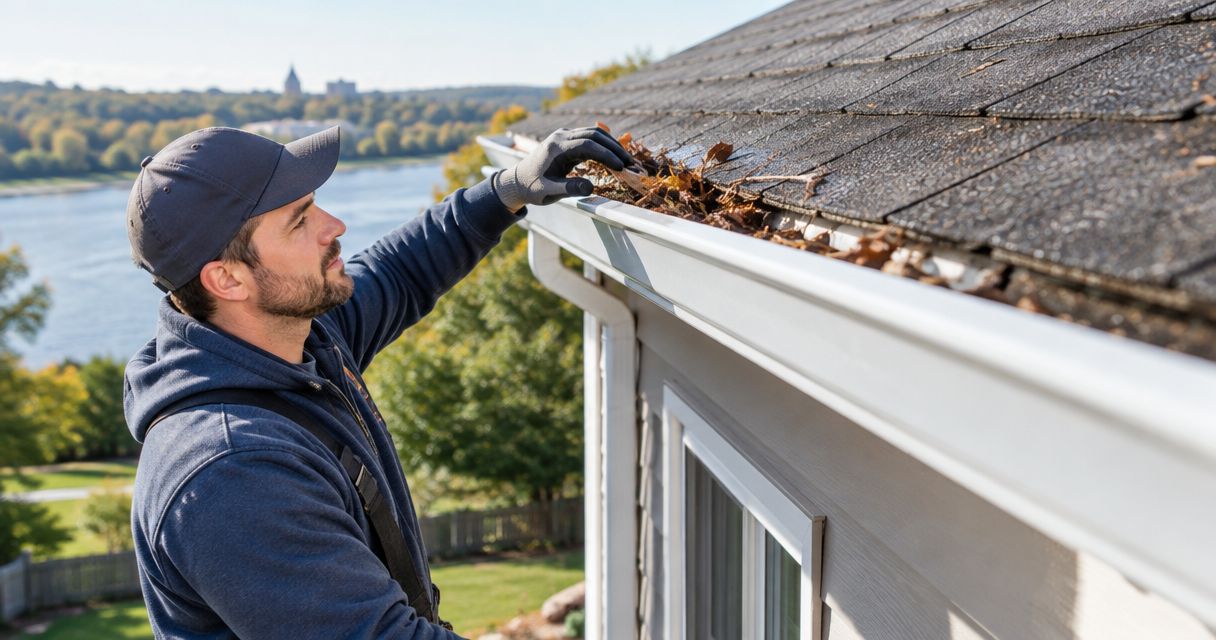
- Clean blocked gutters before deciding whether recurring overflow requires repair or replacement.
- Replace gutters when widespread damage makes isolated repairs an incomplete solution.
- Liberty Exteriors provides gutter installation in Eau Claire and the surrounding Chippewa Valley.
Why this matters
Gutters collect roof runoff and direct it toward downspouts. When that path breaks down, water can spill against siding, soak the ground beside your foundation, or damage the wood supporting the gutter. Replacing the visible metal without addressing the cause leaves the underlying problem unresolved.
Liberty Exteriors is a fit for Eau Claire homeowners seeking gutter installation from a local exterior contractor. The company has served the area since 1984; its Liberty Exteriors website is a starting point for discussing installation needs alongside other exterior work.
When should you replace gutters in Eau Claire?
Replace gutters when the damage affects enough of the system that cleaning or isolated repairs will not restore dependable drainage. For your 2026 assessment, compare what happens during rain with what you can safely see from the ground afterward. A stain shows where water traveled, but it does not establish why the gutter failed.
| Approach | Best for | Benefit | Limitation |
|---|---|---|---|
| Cleaning | Debris blocking an otherwise sound gutter or downspout | Restores an obstructed water path without replacing sound material | Does not fix holes, poor slope, or failing attachments |
| Local repair | An isolated leaking joint, loose attachment, or damaged section | Addresses a specific defect while retaining sound sections | Leaves unrelated wear and drainage problems untouched |
| Replacement | Widespread deterioration, repeated failures, or a system needing redesign | Allows damaged runs and drainage layout to be addressed together | Requires a larger installation scope and careful inspection of supporting surfaces |
A useful inspection separates the condition of the gutter from the condition of the fascia, the board behind it. Sound gutters attached to deteriorated wood need a different scope from corroded gutters on sound backing. Ask the contractor to explain both conditions before recommending work.
Overflow alone is not a replacement verdict
Debris can force water over the edge even when the gutter itself remains usable. A blocked downspout, a low spot, or runoff overshooting the gutter can produce similar symptoms. Have the cause identified rather than approving replacement based only on water spilling during a storm.
Widespread failure changes the decision
Repeated leaks across separate sections, extensive corrosion, or gutters that remain distorted after an appropriate repair point toward replacement. The question is not whether another patch is possible. It is whether that patch restores a reliable path from the roof edge to the discharge point.
Five warning signs to check before requesting work
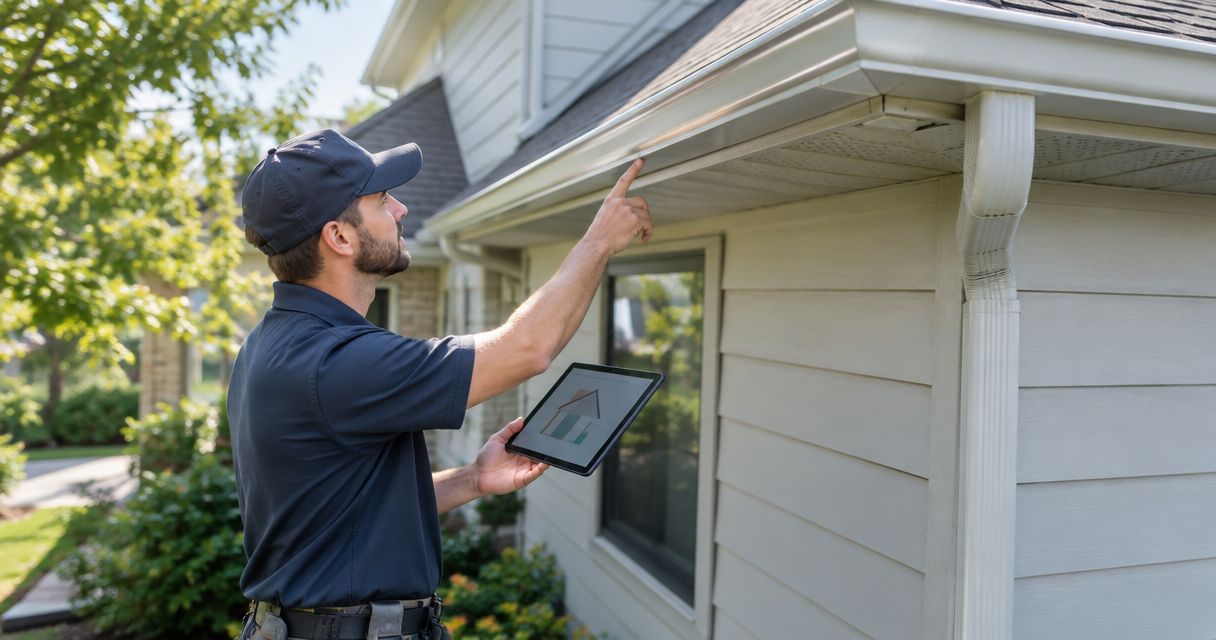
Use these 5 warning signs to organize your inspection, not as an automatic replacement checklist. Stay on the ground, keep clear of loose metal, and leave elevated inspections to someone equipped for the work.
Leaking joints and holes
Watch for water escaping through joints or openings rather than flowing toward the downspout. An isolated joint can be a repair candidate when the surrounding material is sound. Leaks spread across deteriorated sections make a stronger case for replacement.
Notice where the leak lands, too. Water repeatedly striking trim or a doorway deserves attention even when the opening looks small.
Sagging or pulling away
A gutter that bows, twists, or separates from the roof edge needs an attachment and support inspection. Debris weight, damaged hangers, and deteriorated backing are different problems. Reattaching the gutter without checking what holds the fasteners can leave the same weakness in place.
Visible movement or loose sections warrant prompt professional attention. Do not stand beneath a section that appears unstable.
Persistent standing water
Water that remains pooled after drainage has stopped deserves a closer look. Debris or an uneven gutter run can prevent water from reaching the outlet. Ask whether correcting the obstruction or alignment will restore drainage before agreeing to replacement.
A persistent low spot in distorted material is different from a removable blockage. The recommendation should explain which condition exists.
Damaged fascia or nearby trim
Peeling finishes, staining, or softened wood behind a gutter can indicate repeated wetting. These signs do not prove the gutter is the only source; roof-edge details and other water paths also need inspection.
If damaged backing requires repair, make sure that work appears in the scope. New gutters still need a suitable surface for secure attachment.
Water collecting beside the house
Look at the downspout outlet and the ground receiving the discharge. A functioning gutter can still send water to an unsuitable location. Soil erosion, splash marks, or pooling deserve an assessment of the discharge arrangement and surrounding drainage.
Replacing the gutter does not automatically correct where the downspout sends water. Treat collection and discharge as connected parts of the same job.
How to assess your gutters safely in 2026
These 3 checks help you describe the problem clearly without climbing onto the roof. Their purpose is to prepare for an inspection, not to establish a diagnosis from the ground.
- Observe runoff. From a sheltered, safe position, note whether water spills over an edge, leaks through a joint, or misses the gutter altogether. Record the location rather than assuming every wet area has the same cause.
- Check discharge. After the rain, look for blocked outlets, disconnected downspouts, erosion, and water collecting near the house. Stay away from slippery ground and unstable gutter sections.
- Document defects. Photograph visible sagging, separated joints, staining, and damaged trim from ground level. Share which symptoms recur and which appeared after a specific event.
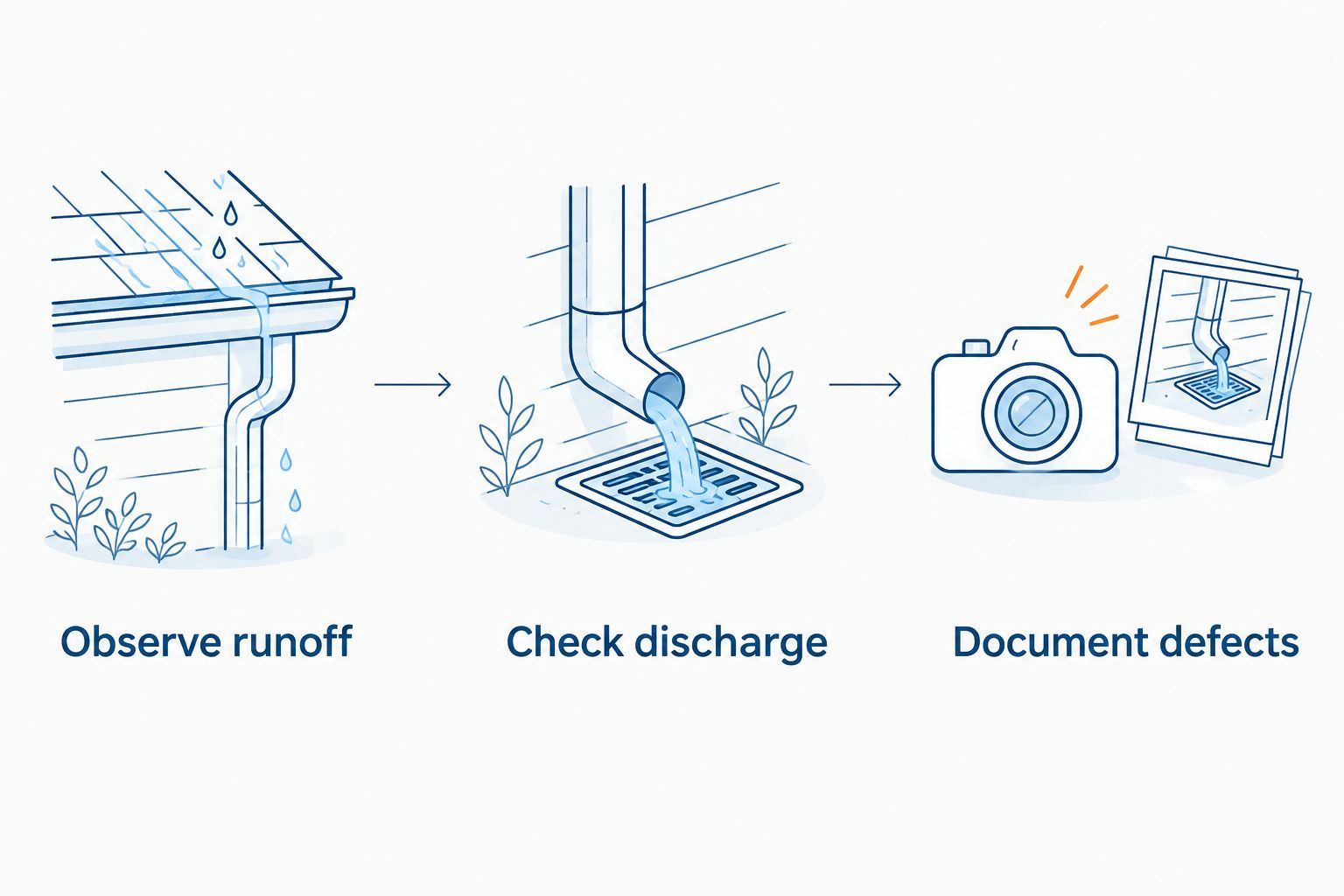
Keep observations factual: water spills above the back door, a joint drips beside the garage, or the outlet discharges into a low area. Specific locations give the installer something to investigate. A general description such as bad gutters does not distinguish a blockage from a damaged run.
Avoid climbing a ladder to inspect gutters during rain, snow, or icy conditions. Ground-level observations are enough to start a useful conversation; a contractor can assess the details that are not safely visible.
Why gutter replacement needs vary
The right scope depends on the condition of the whole drainage path. These factors explain why neighboring homes can need different work even when their gutters look similar from the street.
- Extent of damage: One failed joint presents a different repair decision from deterioration along several runs. Ask which sections remain serviceable and why.
- Roof runoff pattern: Roof valleys and intersecting slopes can concentrate water at particular locations. The assessment should consider where runoff enters the gutter, not just the gutter's appearance.
- Attachment condition: Loose hardware and damaged fascia require different corrections. Confirm whether the supporting wood needs work before installation.
- Downspout arrangement: Blockages, outlet locations, and discharge paths affect drainage. Replacement should not reproduce a known discharge problem without discussion.
- Nearby exterior work: Roofing, siding, and trim work can affect access and installation details. Coordinate related work so finished components do not need unnecessary removal.
- Access and safety: Building height, landscaping, and nearby structures affect how the work is performed. Ask how the crew will reach the gutters and protect surrounding surfaces.
None of these factors makes appearance irrelevant. Matching the home's exterior can be part of the decision, but a color change does not resolve poor drainage. Establish the functional scope first, then discuss finish choices.
What should a 2026 gutter quote explain?
A useful quote describes the proposed work rather than simply naming new gutters. You should be able to connect each part of the scope to a condition found at your home. If replacement is recommended, ask why cleaning or a local repair would leave the problem unresolved.
Start with these 4 questions:
- What is being removed and replaced? Confirm which gutter runs, downspouts, outlets, attachments, and related components are included. Partial replacement should have clear boundaries.
- What happens if damaged wood is uncovered? Ask how the contractor documents hidden damage, obtains authorization, and handles additional work. Do not assume fascia repairs are included.
- Where will the water discharge? Discuss the intended outlet locations and any known pooling. Ask what drainage concerns fall outside the gutter installation scope.
- What coverage applies afterward? Request the product warranty and any workmanship warranty separately, in writing. Confirm who handles each type of claim.
Material coverage and installation coverage are not interchangeable. A product warranty concerns the material under its stated terms; a workmanship warranty concerns covered installation work under its own terms. Neither should be treated as a promise that every future drainage issue is covered.
Liberty Exteriors provides gutter installation alongside roofing, siding, windows, doors, decks, and sunrooms. If your gutter project overlaps another exterior project, discuss the sequence before approving either scope. That conversation helps establish responsibility for removal, attachment surfaces, and reinstallation details.
Can I repair gutters instead of replacing them?
Repair is appropriate when the defect is isolated and the remaining gutter system is sound. Cleaning a blocked outlet, correcting an attachment problem, or repairing a joint can address a specific failure without replacing unaffected sections.
Ask what the repair will correct and what it leaves unchanged. A repair is useful when it solves an identified problem, not when it merely hides the symptom.
Should I replace gutters when replacing my roof?
Replace gutters during roof work only when their condition or the planned roof-edge work justifies it. A new roof does not automatically make existing gutters unusable. Have the roofer and gutter installer clarify which components stay, which need removal, and who is responsible for reconnecting drainage.
If you are planning both projects in 2026, settle the sequence before crews arrive. Existing gutters need protection when they remain in place; replacement gutters need installation details that work with the completed roof edge.
Is spring or fall better for gutter replacement?
The condition of the gutters matters more than a preferred season. An unstable section or active drainage problem needs assessment rather than waiting for a calendar date. Plan safe installation conditions with your contractor and ask what temporary measures are appropriate if work cannot start immediately.
Seasonal cleaning and replacement are separate decisions. Removing leaves or other debris can reveal that the system still works, or expose damage that warrants further work.
FAQ
How do I know whether my gutters need replacing or cleaning?
Cleaning addresses debris; replacement addresses gutters that cannot provide dependable drainage because of widespread damage or an unsuitable configuration. Have the system cleaned and inspected before treating overflow alone as proof that replacement is necessary.
Can one damaged gutter section be replaced?
One damaged section can be a replacement candidate when the adjoining sections and attachments remain sound. Ask the installer how the connection, alignment, and drainage will work with the retained gutters.
Are seamless gutters completely leakproof?
Seamless gutters are not completely leakproof. Corners, outlets, end caps, and other connections still require proper installation and maintenance.
Will new gutters fix water in my basement?
New gutters do not guarantee a dry basement. They address roof runoff, while grading, foundation conditions, and other drainage issues can also contribute to water entry.
What should I ask about gutter warranties in 2026?
Ask for product coverage and workmanship coverage separately in writing. Confirm the exclusions, maintenance responsibilities, claim process, and party responsible for each type of problem.
Does Liberty Exteriors install gutters in Eau Claire?
Liberty Exteriors provides gutter installation for residential and light commercial customers in Eau Claire, the Chippewa Valley, and west central Wisconsin. Discuss the condition of your existing gutters and any related exterior work when requesting a quote.
One last thing
Before approving a gutter project in 2026, ask the installer to explain the complete water path: roof edge, gutter, outlet, downspout, and discharge location. A replacement proposal should account for that path, not stop at the new metal.
Keep your ground-level photos and the written scope together. They give you a straightforward way to compare the original problem with the completed work and ask about anything that remains unresolved.