Asphalt shingle installation starts with protecting your property, removing the old roofing when specified, and checking the roof deck before installing water-protection layers, flashing, and shingles. The job finishes with cleanup and an inspection; damaged decking or concealed leaks can change the work needed before the new shingles go on.
- Asphalt shingle installation includes deck inspection, water protection, flashing, shingles, and cleanup—not just attaching shingles.
- Liberty Exteriors provides roofing installation for homeowners in Eau Claire and the surrounding Chippewa Valley.
- Ask how the contractor handles hidden deck damage before approving the roofing scope.
- Separate the shingle manufacturer's product warranty from the contractor's workmanship warranty.
Why this matters
A finished roof hides much of the work that keeps water out. Straight shingle rows do not tell you whether the decking was sound, the flashing was handled correctly, or the attic ventilation was considered.
For a 2026 roofing project, ask for a written description of the work beneath the shingles as well as the shingles themselves. Liberty Exteriors provides roofing installation in Eau Claire and the surrounding Chippewa Valley, where homeowners need clear answers about preparation, weather protection, and the finished job.
Judge a roofing proposal by what it explains about the whole roof, not just the shingle selection. You should understand what happens if the crew finds damage, who approves additional work, and what the final inspection covers.
What happens during asphalt shingle installation?
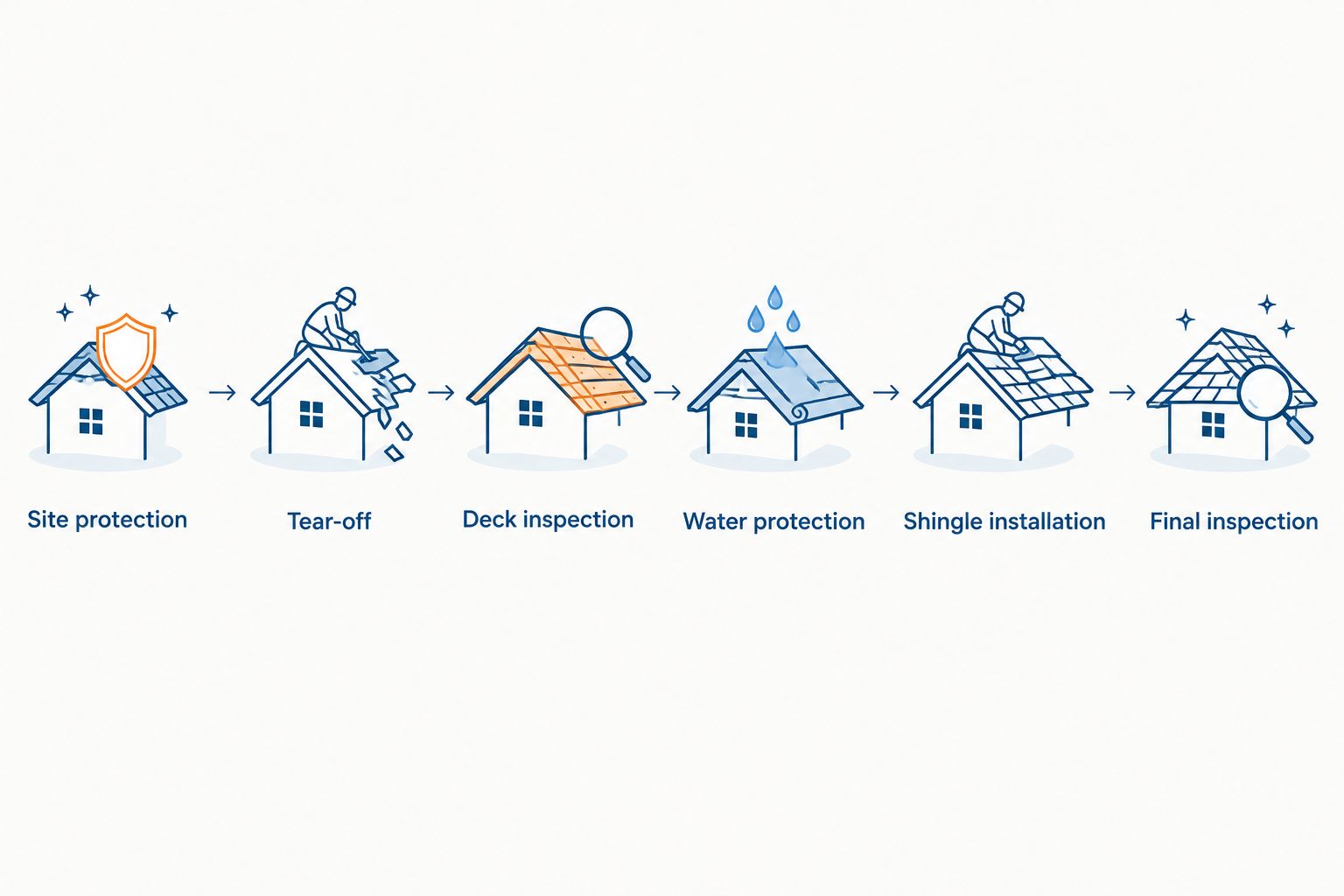
A roof replacement generally follows 6 stages, although the details depend on the existing roof, the selected roofing system, and the manufacturer's instructions. Ask the contractor to explain any departure from this sequence before work begins.
1. Site protection
The crew establishes access, plans debris removal, and protects vulnerable areas around the house. Discuss landscaping, outdoor furniture, driveway access, exterior equipment, and where roofing materials will be placed.
Inside, roofing work creates noise and vibration. Move fragile items away from places where vibration could knock them down, and keep children and pets away from the work area. Ask which doors you can use safely while materials and debris are moving overhead.
Your preparation list should be specific to your property. A narrow driveway, attached sunroom, or deck below the roof edge deserves a conversation before the crew arrives, not after materials are unloaded.
2. Tear-off
When the scope calls for replacement down to the deck, the crew removes the existing shingles and the roofing layers identified in the agreement. Removing those materials exposes the surface that supports the new roof.
Tear-off also reveals conditions that cannot be fully assessed from the ground. Stained sheathing, deteriorated wood, and old flashing details need evaluation before they disappear under new materials.
Agree on the hidden-damage approval process before tear-off starts. Ask how the contractor documents a problem, explains the repair, and obtains authorization. A homeowner should not have to guess why the original scope changed.
3. Deck inspection
The roof deck is the wood surface beneath the roofing materials. The installer checks whether it provides a sound, suitable base for the selected shingles and their fasteners.
Deteriorated or unsuitable decking needs attention before covering it. Ask for photographs of damaged areas and an explanation of the proposed repair rather than relying on a description such as bad wood.
This stage also provides an opportunity to investigate visible evidence of past leakage. Replacing damaged decking addresses the affected material; identifying the water-entry detail helps address the cause. Those are related tasks, but they are not interchangeable.
4. Water protection
The crew installs the specified underlayment and any required ice-barrier membrane, along with roof-edge and flashing details in the appropriate sequence. These materials help manage water beneath or around the shingles.
Flashing directs water at vulnerable transitions, including walls, chimneys, valleys, and roof penetrations. Its installation must work with adjacent materials rather than simply covering a joint with sealant.
Ask where an ice barrier is required, how the roof meets existing siding, and whether existing flashing will be replaced or reused. Any reuse needs a clear explanation of condition and compatibility. Follow the applicable code and the selected manufacturer's instructions rather than assuming every roof uses the same details.
5. Shingle installation
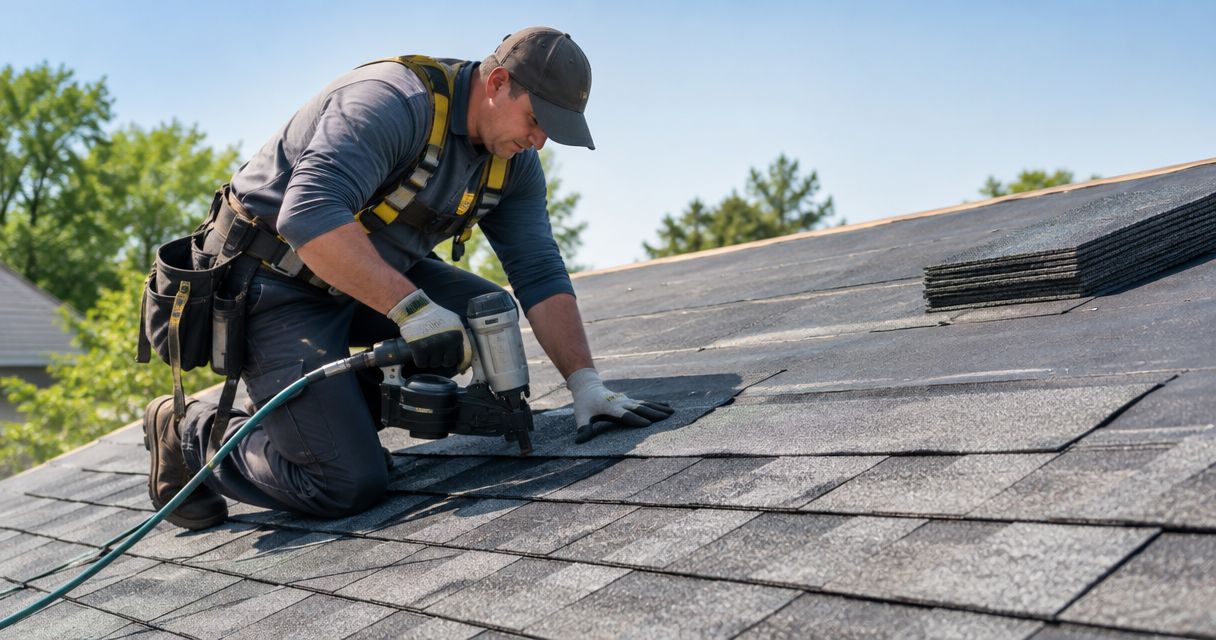
Installers lay out the starter course, shingle courses, and ridge materials according to the selected system. Alignment matters, but so do fastener placement, fastening depth, and the required overlap between courses.
There is no universal fastening pattern for every asphalt shingle and roof condition. The product instructions govern details such as nail placement and application requirements; wind-related requirements can also affect the installation.
Roof penetrations and transitions require particular attention as the courses progress. Ask how vent openings, pipe boots, and roof-to-wall connections are incorporated into the work. A clean-looking shingle surface is not a substitute for correct details around those interruptions.
6. Final inspection
The contractor checks the completed work, removes debris, and reviews the project with you. Ask how the inspection addresses flashing, exposed fasteners, roof penetrations, gutters, and the areas used for material handling.
Ground cleanup should include a search for roofing nails, but no cleanup method guarantees that every concealed nail is found. Keep watching driveways, lawn edges, and planting beds after the crew leaves.
Before closing the project, collect the product information, written warranty terms, and any required registration instructions. Confirm whom to contact if you notice a concern after rain or find damage related to the work.
Tear-off replacement versus an overlay
A tear-off replacement removes existing roofing as specified before the new roof is installed. An overlay places new shingles over an existing shingle covering, where the roof condition, applicable code, and product requirements permit it.
An overlay is not automatically an appropriate shortcut. It leaves the deck concealed and requires a careful assessment of the existing roof. For your 2026 proposal, have the contractor identify the intended approach explicitly.
| Approach | Best for | Main advantage | Main limitation |
|---|---|---|---|
| Tear-off replacement | Projects needing direct inspection of the deck | Exposes underlying conditions and allows repairs before covering | Creates more removal debris and exposes hidden repair needs |
| Overlay | Existing roofs confirmed suitable under code and manufacturer requirements | Avoids removing the existing shingle covering | Leaves the deck concealed and retains existing roof layers |
Tear-off replacement: inspect before covering
Tear-off gives the installer direct access to the deck and existing roof details. That is valuable when the project needs an assessment of concealed deterioration or corrections beneath the shingles.
The trade-off is more removal work and the possibility of discovering repairs that were not visible beforehand. Request a clear repair-approval process rather than assuming an initial inspection identifies every concealed problem.
Overlay: confirm suitability first
An overlay requires more than an existing roof that looks reasonably flat from the driveway. The contractor needs to evaluate the roof condition, existing layers, structural considerations, and the requirements that apply to the selected materials.
Ask why an overlay is suitable for your specific roof and what remains uninspected beneath it. If the explanation does not address those limits, you do not yet have enough information to approve that approach.
Why asphalt shingle installation varies
The installation sequence is broadly consistent, but the details change with the building. These factors explain why neighboring homes can need different scopes:
- Deck condition: Sound decking supports the roofing system; deteriorated areas need repair before installation continues.
- Roof shape: Valleys, dormers, intersecting roof sections, and steep areas change access and water-management details.
- Existing roof layers: The existing assembly affects removal work and whether an overlay is even an option.
- Flashing connections: Chimneys, sidewalls, skylights, and penetrations each create details that need a defined approach.
- Ventilation: Intake and exhaust openings need evaluation as a system, not simply replacement with whatever was there before.
- Weather conditions: Rain, snow, temperature, and wind affect safe work and the application requirements of roofing materials.
A 2026 installation plan should explain weather protection without promising that weather will cooperate. Ask what happens if the roof is open when conditions change and how the crew limits exposed areas during the work.
What should you ask before approving the work?
Use 3 questions to turn a general roofing proposal into a scope you can understand. The purpose is not to tell the installer how to do the job; it is to establish what you are authorizing.
- What gets removed, replaced, or reused? Ask specifically about decking repairs, underlayment, ice barriers, flashing, vents, pipe boots, and roof-edge materials. A proposal that names only the shingles leaves major details unanswered.
- How are unexpected repairs approved? Request an explanation of documentation, authorization, and how additional work is recorded. Decide who can approve changes if you are unavailable during the day.
- What happens at handoff? Ask about the final inspection, cleanup, project documents, warranty information, and the contact process for a concern after completion.
Liberty Exteriors is best suited to homeowners seeking a local roofing installation contractor serving Eau Claire and the Chippewa Valley. The company has served the area since 1984 and provides exterior installation services, including roofing. As with any contractor, confirm the project-specific materials, installation details, and warranty terms in writing rather than assuming them from a general service description.
How long will my roof be exposed during installation?
The exposure period depends on the roof, the work sequence, repair needs, and weather. Ask the contractor how much roofing the crew intends to remove at a time and how unfinished areas will be protected.
A completion estimate and an exposure plan answer different questions. You need both: one explains the expected schedule, while the other explains how the house is protected during the job.
Will the contractor replace all the flashing?
Flashing replacement depends on the written scope and the condition and suitability of existing details. Have the contractor identify which components will be replaced and explain any proposed reuse before installation begins.
Pay particular attention where roofing meets siding, masonry, or another roof section. These connections can involve work beyond the visible shingle field, so a blanket statement that flashing is included is less useful than a specific description.
Does a new roof include a workmanship warranty?
A new roof has 2 warranty categories to distinguish: product coverage and workmanship coverage. A manufacturer's product warranty addresses covered material issues under its terms; a workmanship warranty addresses covered installation issues under the contractor's written agreement.
For a 2026 roof replacement, request both sets of terms before approving the work. Check exclusions, registration requirements, transfer provisions, and the process for reporting a problem. Do not assume the manufacturer's coverage includes every installation error or that all contractors offer identical workmanship terms.
FAQ
Do I need to leave my house during asphalt shingle installation?
Whether you need to leave depends on access restrictions, household needs, and the contractor's safety plan. Expect noise and vibration, and arrange a safe area for children and pets away from the work.
Can new asphalt shingles go over old shingles?
An overlay is an option only when the existing roof, applicable code, and manufacturer requirements allow it. It leaves the deck concealed, so ask what the contractor can and cannot inspect.
What happens if the roofer finds rotten decking?
Deteriorated decking needs repair before new roofing covers it. Ask the contractor to document the damage and obtain authorization through the change process agreed upon before work began.
Can asphalt shingles be installed in cold weather?
Cold-weather installation must follow the selected manufacturer's application requirements and safe working practices. Ask how temperature affects handling, sealing, and any additional installation steps for the chosen shingles.
Will new shingles fix an attic ventilation problem?
New shingles alone do not correct an attic ventilation problem. The contractor needs to evaluate intake and exhaust openings and explain any ventilation work included in the roof project.
What should I check after the roofing crew leaves?
Check the ground for debris, look for visible property damage, and review the project documents and warranty terms. Leave roof-level inspection to qualified professionals rather than climbing onto the roof yourself.
Does Liberty Exteriors handle roofing installation near Eau Claire?
Liberty Exteriors provides roofing installation for residential and light commercial customers in Eau Claire, the Chippewa Valley, and west central Wisconsin. Confirm the scope and terms for your property before authorizing work.
One last thing
Before approving your 2026 roofing project, ask the contractor to show you how a roof-to-wall connection will be handled. It is a small part of the visible roof, but it reveals whether the proposal accounts for water moving between adjoining materials.
The most useful question is not just which shingles you are getting—it is what happens underneath and around them. Get that answer while changes can still be written into the scope, not after the finished roof conceals the work.