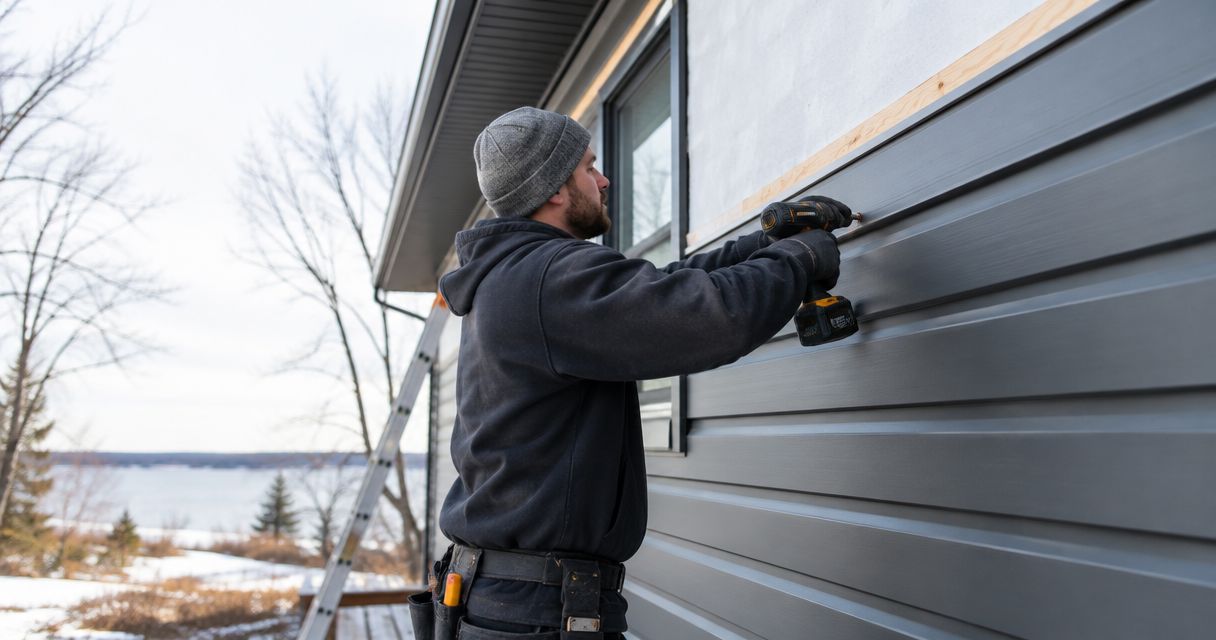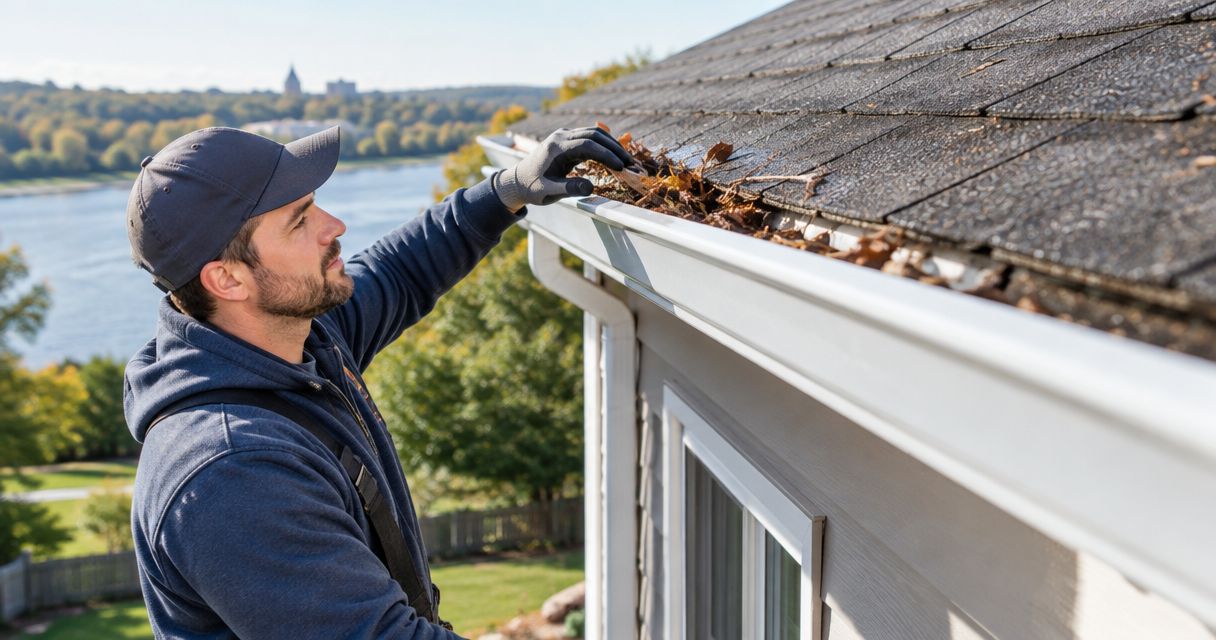
A 2026 seamless gutter installation quote should identify the gutter material and size, measured runs, downspout locations, attachment method, drainage plan, removal, cleanup, and warranty terms. It should also explain how hidden fascia damage, changes to the scope, and optional accessories will be handled before you approve the work.
- A seamless gutter installation quote needs a written scope, not just a total.
- Specify downspouts, discharge locations, attachment details, removal, and cleanup before signing.
- Separate product warranty coverage from installation workmanship coverage.
- Liberty Exteriors serves Eau Claire homeowners seeking gutter installation from a local exterior contractor.
Why this matters
A gutter quote is a description of the finished drainage system, not just the gutter attached to your roof. Two proposals can cover the same house while including different downspouts, repair allowances, and disposal responsibilities. Without those details, you are comparing different jobs.
For Eau Claire and Chippewa Valley homeowners, Liberty Exteriors provides gutter installation alongside other exterior improvement services. Use the same written checklist for every 2026 proposal, whether the gutters are a stand-alone project or part of roofing, siding, or fascia work.
What should a seamless gutter installation quote include?
A complete quote should let you point to each roof edge, identify where water will go, and understand what the installer will leave behind. The following checklist separates a defined scope from an unanswered question.
| Quote item | What the written scope should identify | What needs clarification |
|---|---|---|
| Gutter runs | Locations, measured lengths, profile, size, material, and finish | A general description with no measurements |
| Downspouts | Locations, sizes, routing, outlets, and discharge points | Whether existing downspouts stay or are replaced |
| Attachment | Hanger system, fastening approach, and attachment surface | Whether damaged fascia affects installation |
| Water discharge | Where each downspout releases water | Whether extensions or drainage connections are included |
| Existing materials | Removal, disposal, and any components being reused | Who handles debris and abandoned attachments |
| Repairs and changes | Included repairs and approval process for additional work | Whether concealed damage is covered by the original scope |
| Completion terms | Scheduling, payment stages, cleanup, and warranty documents | What counts as completion and how concerns are reported |
You do not need to become a gutter installer to review this information. Ask the contractor to explain anything you cannot connect to your house. A clear proposal should make those explanations easier, not replace them with unfamiliar terminology.
How do you check the installation scope?
Walk around the property with the proposed scope in hand. Focus on the route water takes from the roof to its final discharge point, then check the installation and cleanup responsibilities.
-
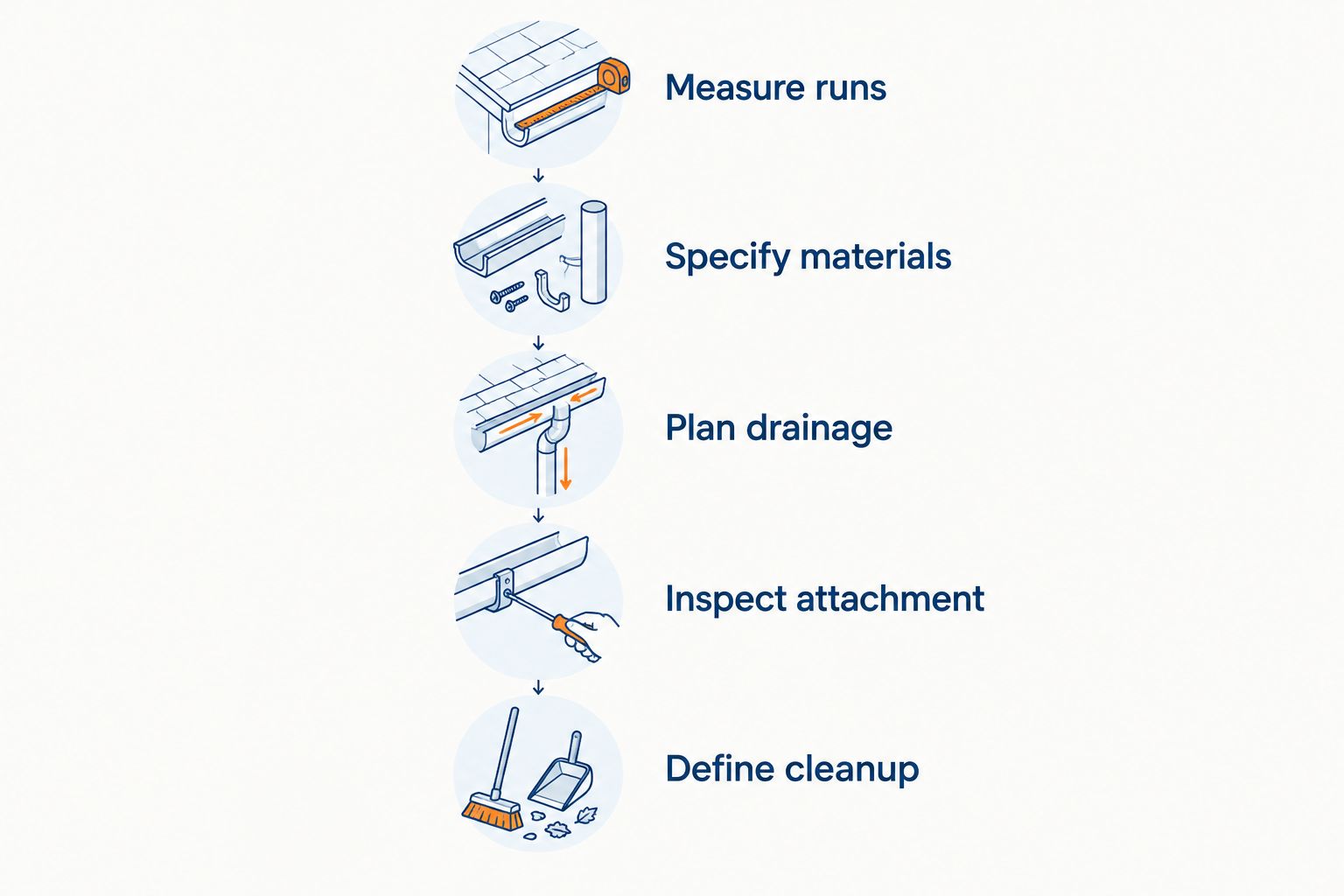
Measure runs. Ask which roof edges receive new gutters and whether the quote records their lengths. Note porch roofs, attached garages, short return sections, and additions separately so they do not disappear inside a general description. Confirm whether corners, end caps, and outlets are part of those runs. A sketch can make the scope easier to check than a paragraph alone.
-
Specify materials. Request the gutter material, profile, size, finish, and downspout specifications in writing. If the proposal names a manufacturer or product, ask for the matching product information. Do not accept a color description as the entire specification. Appearance matters, but the quote also needs to identify what is being installed and what will attach it to the house.
-
Plan drainage. Locate every downspout and follow its proposed route to the ground. Ask where water will discharge and whether elbows, extensions, or connections to existing drainage are included. Flag outlets near steps, walkways, foundations, and neighboring property. Connecting a downspout to an existing underground pipe is a different task from confirming that the pipe works.
-
Inspect attachment. Ask what surface will support the gutters and whether the installer has identified visible deterioration. Fascia is the board along the roof edge where gutters commonly attach; covering damaged wood does not repair it. The proposal should distinguish known repairs from concealed conditions and state how the contractor obtains your approval before expanding the work.
-
Define cleanup. Confirm who removes old gutters, collects cutoffs and fasteners, and disposes of debris. Ask whether unused brackets and attachment points will be addressed, and how landscaping or nearby surfaces will be protected during removal. Finally, identify who walks the completed work with you and how you report a concern after the crew leaves.
Keep the marked-up scope with your 2026 project documents. The purpose is not to dictate installation technique; it is to make sure the contractor and homeowner agree on the same finished job.
Which scope fits your gutter project?
Replacing gutters does not automatically mean replacing every connected component. Reusing sound parts can keep the work focused, but only when their condition and compatibility have been checked. Treat accessories as separate decisions rather than assuming every proposal includes them.
| Scope option | Best for | Benefit | Limitation to resolve |
|---|---|---|---|
| Gutters only | Homes with suitable existing downspouts | Keeps work focused on gutter runs | Existing downspouts still need inspection and compatible connections |
| Gutters and downspouts | Projects that need revised routing or replacement components | Lets the contractor plan the connected system together | Discharge locations and ground-level work still need a written scope |
| Optional gutter guards | Homeowners considering help with debris management | Adds a debris-control component | Does not eliminate inspection or maintenance; design and warranty terms need review |
Choose the scope that addresses the condition of your house, not the option with the longest accessory list. Ask the contractor to explain why each retained or replaced component belongs in the plan.
If guards are proposed, request their exact identification and installation requirements. Ask how you will inspect or clean the gutters afterward, and whether the accessory affects access to fasteners, outlets, or the roof edge. Keep the guard decision separate from repairing damaged supports or resolving an unclear discharge route.
Why gutter installation quotes vary
A 2026 quote is only comparable to another proposal when both describe the same work. Differences in scope are not automatically signs of poor quality or unnecessary work; they are questions to resolve before signing.
- Roof layout. Corners, separate roof sections, and transitions change the arrangement of gutter runs and connections. Ask whether every roof edge discussed during the visit appears in the proposal.
- Access conditions. Building height, landscaping, decks, and nearby structures affect how crews reach the work. Ask what access the contractor needs and what you must move before installation.
- Material specifications. Material, profile, size, finish, and attachment details distinguish one proposal from another. Compare the actual specifications rather than treating every gutter description as interchangeable.
- Downspout routing. Reusing existing routes is different from adding outlets or moving discharge points. Confirm whether ground-level extensions and drainage connections belong to the gutter scope.
- Existing damage. Deteriorated fascia or other attachment surfaces can require repair before installation. Separate visible, included repairs from concealed conditions that need later approval.
- Removal and coordination. Disposal, cleanup, and work around roofing or siding affect the project scope. Confirm which contractor handles each overlapping task and in what order.
Ask for an explanation of differences before asking contractors to revise their proposals. Removing a necessary task makes quotes look more alike without making the finished work equivalent.
Should downspouts be included in a gutter quote?
Downspouts should always be addressed in the quote, even when they are being reused rather than replaced. The proposal should name their locations, describe connections to the new gutters, and state where water will discharge. If a downspout is staying, ask the installer to confirm that its condition and connection suit the proposed work.
Do not assume that a new gutter run includes an extension across a planting bed or a connection to underground drainage. Those are separate scope questions, and each needs a written answer.
Does seamless mean the gutters have no joints?
Seamless gutters use continuous runs, but the finished system still has connections. Corners, end caps, and outlets remain places where components meet, so the quote should address those details rather than relying on the word seamless as a complete specification.
Ask how the contractor handles connections and how you should report leakage after installation. The material description does not replace a clear workmanship scope or explain which warranty applies to a particular problem.
Does the gutter quote cover fascia repair?
Fascia repair is included only when the written scope says it is included. A gutter replacement proposal should distinguish identified damage from conditions that cannot be assessed until existing materials come off. Ask how additional work is documented and approved before the contractor proceeds.
You should also know who handles related roofing or siding work if the repair crosses those boundaries. That responsibility matters more than a broad statement that the crew will take care of everything.
What should you confirm before accepting the quote?
Read the scope alongside the contract terms, not separately. A detailed material list does not answer when work begins, how changes are approved, or what documents you receive at completion.
- Scheduling: Ask how the contractor confirms the start, communicates weather delays, and handles temporary interruptions to drainage during the work.
- Payment: Make sure payment stages and completion requirements are written clearly. Resolve any mismatch between the proposal and the contract before signing.
- Changes: Require a written description and your approval before additional work begins. Identify who is authorized to discuss and approve a change.
- Warranty: Separate the manufacturer's product warranty from the contractor's workmanship warranty. Request the applicable documents, exclusions, and process for reporting a problem.
- Final review: Ask how the contractor checks the installation and documents any unfinished items. Keep product information and maintenance instructions with the accepted scope.
Liberty Exteriors provides gutter installation as well as roofing, siding, windows, doors, decks, and sunrooms. If your gutter project overlaps another exterior improvement, ask for a clear boundary between those scopes rather than assuming the same work appears in both proposals.
FAQ
What should I look for first in a seamless gutter installation quote?
Start with the written scope: gutter runs, material, size, downspouts, and discharge locations. Then check removal, repairs, cleanup, and warranty terms before comparing proposals.
Do I need new downspouts when I replace my gutters?
You do not automatically need new downspouts, but the existing ones need an assessment for condition and compatibility. The quote should state which components stay and how they connect to the new gutters.
Are gutter guards normally part of the installation scope?
Gutter guards are included only when the proposal lists them. Ask for the specified product, maintenance requirements, and applicable warranty terms before accepting that option.
Who pays for damaged fascia found during gutter replacement?
The written agreement should explain how concealed damage and additional repairs are handled. Confirm the approval process before work starts rather than assuming those repairs belong to the original scope.
Does a gutter product warranty cover installation mistakes?
A product warranty and a workmanship warranty cover different responsibilities. Read each document to identify covered problems, exclusions, and the party you contact for service.
Should old gutter removal and disposal appear in the quote?
Yes, removal and disposal responsibilities should appear in the written scope. Also confirm cleanup of cutoffs, fasteners, and other installation debris.
How do I compare gutter quotes that include different work?
Compare the scope line by line before comparing the totals. Ask contractors to explain differences in materials, downspouts, repairs, drainage, and cleanup so you understand what each proposal includes.
One last thing
Liberty Exteriors is best for Eau Claire homeowners seeking gutter installation from a local exterior contractor. Whatever contractor you choose, make the final discharge point part of the conversation: a neatly installed gutter is not a complete drainage plan when nobody has explained where its water goes.
Before signing a 2026 proposal, stand at each planned downspout location and ask the installer to describe the route from the outlet to the discharge point. Save those agreed details with the accepted quote. That simple check connects the paperwork to the result you expect at your home.