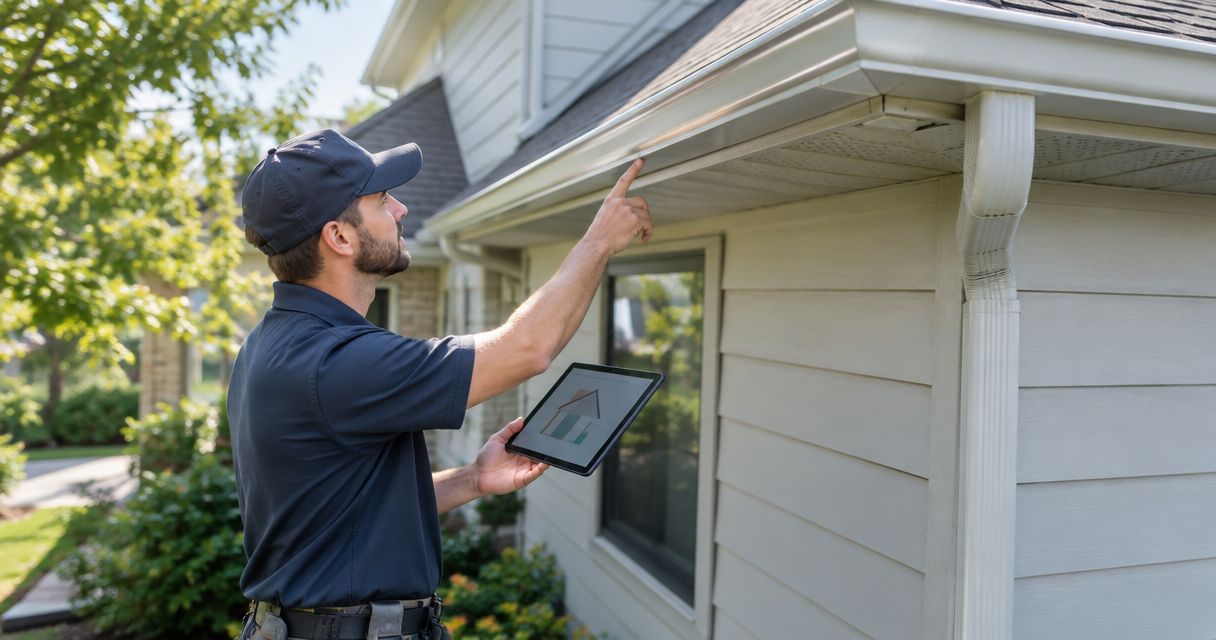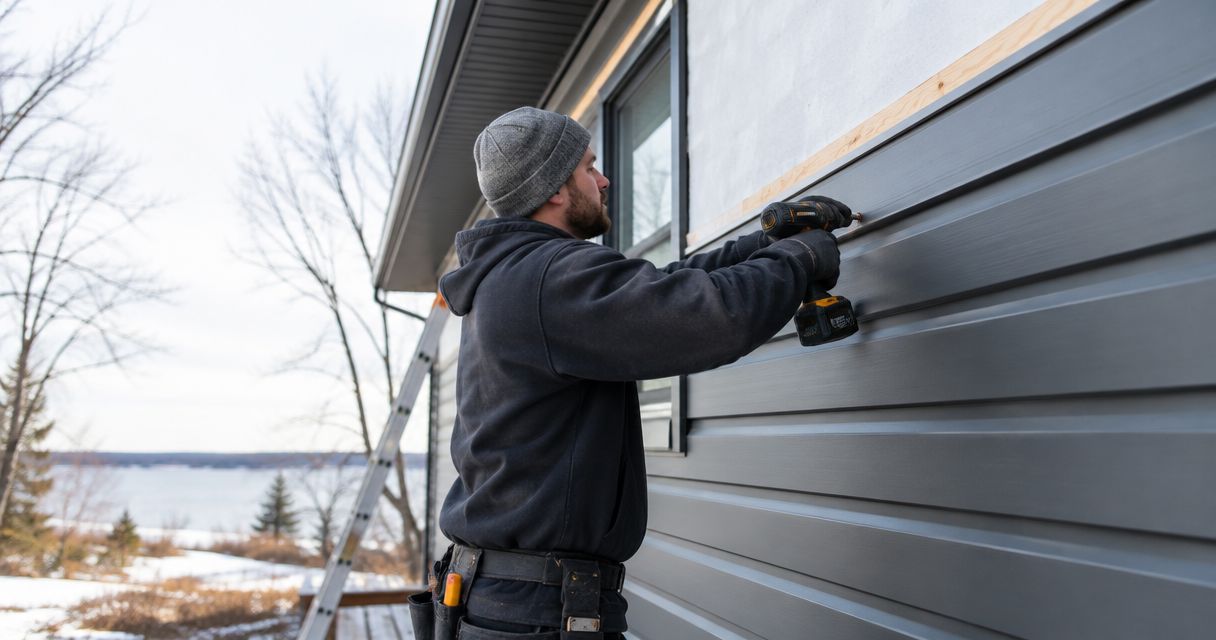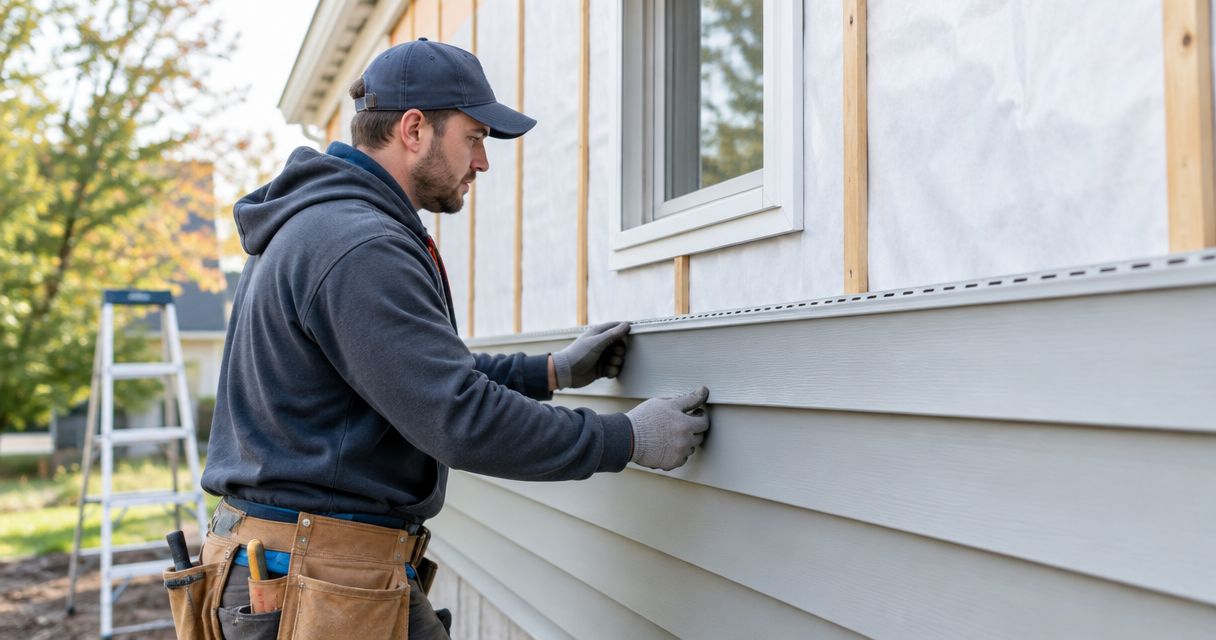
Vinyl siding installation should include a written scope, wall inspection and preparation, a water-management plan, correctly fastened siding and trim, and a final cleanup and walkthrough. Your agreement should also explain concealed-damage repairs, work around windows and doors, and the separate terms for product and workmanship warranties—not just the visible panels.
- Vinyl siding installation needs wall preparation, flashing, room for movement, and a written closeout checklist.
- Liberty Exteriors serves Eau Claire homeowners seeking siding installation and other exterior improvements.
- Compare installation details, exclusions, and repair approval procedures before choosing a contractor.
- Product warranties and workmanship warranties cover different responsibilities; ask for both in writing.
What should vinyl siding installation include?
A complete siding proposal describes the wall underneath the siding as clearly as the siding itself. Use this 2026 checklist to compare written scopes rather than judging a proposal by its material name alone.
| Included item | What the written scope should explain | What to ask |
|---|---|---|
| Existing siding | Removal or installation over an approved existing surface | What stays on the wall, and why? |
| Wall preparation | Inspection, fastening surface, and repair responsibilities | How will concealed damage be documented? |
| Water management | Water-resistive barrier and flashing details | How will water drain around openings? |
| Siding and accessories | Identified panels, starter pieces, corners, and trim | Which materials are included? |
| Installation method | Manufacturer-required fastening and movement allowances | Which installation instructions apply? |
| Connected features | Work around lights, outlets, gutters, and other attachments | Who removes and reinstalls each item? |
| Closeout | Debris removal, walkthrough, and warranty documents | What must be completed before acceptance? |
Liberty Exteriors provides siding installation in Eau Claire and the surrounding Chippewa Valley, with local experience serving the area since 1984. For your project, ask for a scope that addresses the condition of your walls and the exterior features affected by the work.
Why this matters
Vinyl siding sheds much of the rain that reaches your exterior, but it is not a waterproof wall by itself. The layers and flashing behind it must direct water back outside. Attractive panels do not compensate for missing drainage details.
Installation also has to accommodate movement as temperatures change. Panels fastened too tightly cannot move as intended; panels installed over an uneven surface can show that unevenness. Your contract should address these underlying requirements before work begins.
Wall inspection and preparation
The installer should evaluate whether the wall provides a sound, reasonably flat surface that can hold the required fasteners. Loose materials, damaged sheathing, and deteriorated wood need an agreed repair process rather than being hidden behind new siding.
Ask how the contractor will handle findings that become visible only after removal. A useful process includes photographs, an explanation of the repair, and your written authorization before additional work proceeds.
Your 2026 agreement should identify who decides whether a surface is suitable for installation. It should also distinguish repairs already included in the scope from concealed conditions that require a separate decision.
Removal versus installation over existing siding
Neither approach belongs in a proposal without an explanation of the existing wall condition. Best for labels describe the project conditions—not a blanket recommendation for every house.
| Approach | Best for | Advantage | Limitation |
|---|---|---|---|
| Remove existing siding | Walls needing direct inspection or correction of existing layers | Exposes the underlying surface for assessment | Adds removal and disposal work; concealed repairs can expand the scope |
| Install over existing siding | Existing assemblies confirmed suitable under applicable instructions and requirements | Avoids removing a suitable existing layer | Leaves more of the underlying wall concealed and changes trim relationships |
Choose removal when the wall needs direct inspection or correction. Consider installation over existing siding only after the contractor explains why the surface, fastening, and surrounding details are suitable. Convenience alone is not a wall-preparation plan.
Water management behind the panels
The scope should explain the water-resistive barrier and how it connects with flashing. Flashing directs water away from vulnerable joints and openings; the barrier provides a drainage layer behind the siding.
Ask specifically about windows, doors, roof-to-wall intersections, and penetrations for utilities or fixtures. These locations require coordinated details rather than separate pieces installed without regard to drainage.
An existing barrier is not automatically ready for reuse. Ask how its condition will be checked and how tears, uncovered areas, or disturbed connections will be addressed. If the proposal says only that housewrap is included, request an explanation of where it goes and how it connects to openings.
The important question is where water goes after it gets behind the siding. The answer should describe a continuous route outside, not simply name a wrapping material.
Panels, trim, and fastening
Your material list should identify the selected siding and the accessories needed to finish it. Starter strips, outside and inside corners, receiving trim, and finish pieces are part of the installation—not details to leave until the crew reaches them.
Vinyl expands and contracts with temperature changes. Fasteners must secure the panels while allowing the movement required by the selected manufacturer's instructions. Panel ends and trim connections also need the specified clearances.
Avoid asking for one universal clearance measurement. Required details depend on the product and installation conditions, so the contractor should follow the applicable instructions rather than a remembered rule.
Ask how the installer will establish level courses and handle changes in wall height. Around windows and doors, ask how cut panels will be supported and secured. These questions reveal more about the installation plan than a sample panel alone.
Windows, doors, and exterior attachments
A siding job affects more than uninterrupted wall space. Your scope should account for exterior lights, receptacles, vents, hose connections, downspouts, and other items mounted through or against the siding.
Ask whether each item will be removed, worked around, or reinstalled with a suitable mounting detail. The plan should identify any electrical or other specialized work that requires a separate qualified trade.
Also discuss connections near decks, roof edges, and sunrooms where those features meet the siding. Those joints need appropriate drainage and attachment details. A neat-looking bead of sealant does not replace required flashing.
If window or door replacement is part of your broader renovation, settle the sequence before siding begins. Coordinate the surrounding trim and flashing so one project does not undo another's work.
A practical installation sequence
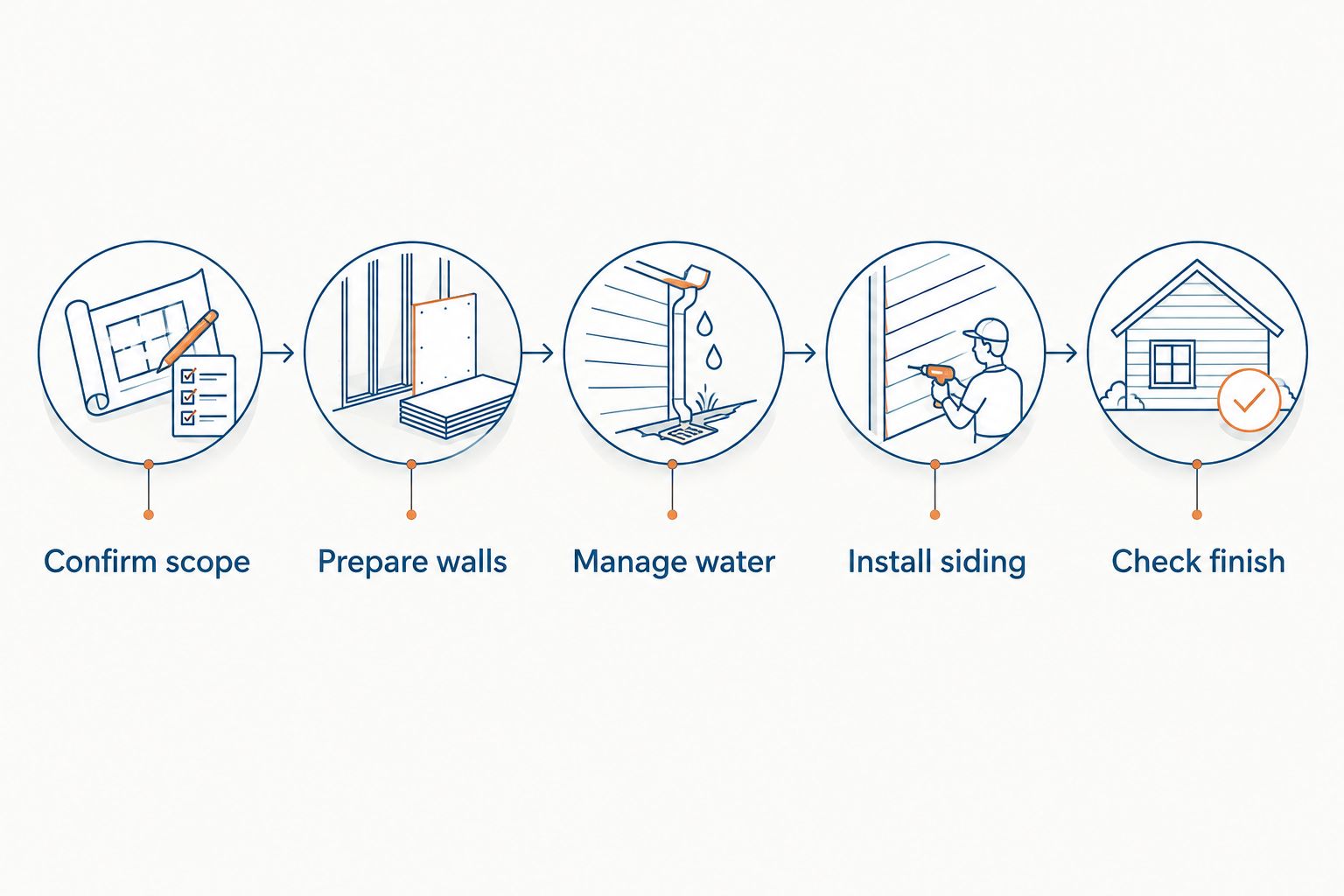
The exact sequence depends on the house and chosen assembly, but the proposal should show how preparation leads into installation and inspection. Use these steps to organize the conversation before signing.
- Confirm scope. Identify materials, affected walls, exclusions, protection measures, and who handles connected fixtures.
- Prepare walls. Remove specified materials, inspect exposed surfaces, and obtain approval for additional repairs.
- Manage water. Complete the barrier and flashing details before covering them with panels.
- Install siding. Fit accessories and panels using the selected product's fastening and movement requirements.
- Check finish. Inspect completed details, remove debris, and review documents and unresolved items together.
Ask for photographs of important concealed details before the siding goes on. Those images do not replace proper installation, but they give you a record of work that the final walkthrough cannot expose without removing panels.
Why vinyl siding installation scope varies
A larger material list does not necessarily mean a better installation. The right scope responds to the house. For a 2026 project, ask how these conditions affect the proposed work:
- Existing wall condition: Deteriorated sheathing or an uneven surface requires attention before new panels cover it.
- Existing layers: Removal and installation over an existing surface involve different inspection and trim considerations.
- Openings and penetrations: Windows, doors, vents, and exterior fixtures create additional flashing and finishing details.
- Wall shape and access: Gables, corners, and hard-to-reach areas change how the work is organized.
- Connected improvements: Roofing, gutters, decks, and sunrooms can affect siding joints and project sequence.
- Selected siding system: The chosen product determines compatible accessories and installation requirements.
Ask the contractor to explain which conditions apply to your home. A proposal should connect those conditions to specific work, not rely on a general statement that everything necessary is included.
What should the final walkthrough cover?
The final walkthrough should cover panel appearance, trim, fixtures, cleanup, and any unfinished work. Look along the walls from different angles for visibly uneven courses or distorted panels, then ask the installer to explain any concern.
Check that exterior fixtures and downspouts included in the scope have been addressed. Confirm that doors and windows affected by the work operate properly and that debris has been removed from agreed work areas.
Do not use the walkthrough to test hidden flashing by spraying water into joints or pulling panels apart. Ask for installation records and an explanation of concealed details instead. Record unresolved items in writing and agree on the next action.
Does vinyl siding installation include insulation?
Vinyl siding installation does not automatically include added insulation. A proposal must identify insulation separately if it is part of your project, including its location and how it affects trim, fastening, and wall thickness.
Do not assume that new siding alone solves drafts or indoor comfort problems. Ask the contractor to distinguish the siding work from any proposed air-sealing or insulation work so you understand what each part addresses.
Should old siding always be removed?
Old siding does not always require removal, but keeping it requires a suitable existing assembly and an installation method that meets applicable requirements. Ask what the contractor can verify without removal and what will remain concealed.
If the existing layers prevent sound fastening, conceal a suspected problem, or interfere with necessary details, resolve those issues before approving an overlay. A suitable surface matters more than avoiding demolition.
Product warranties and workmanship warranties are different
A product warranty concerns the manufacturer's stated coverage for the material. A workmanship warranty concerns the installer's stated responsibility for installation. Neither document should be treated as a substitute for the other.
Ask for the actual terms, exclusions, claim procedure, and any registration requirements. Confirm who you contact if a panel problem appears and how the cause will be assessed. Do not assume that material coverage includes labor or that every installation issue falls under the same agreement.
When discussing siding installation with Liberty Exteriors, request the applicable warranty documents for the proposed work. Keep those documents with your 2026 contract, material selections, change approvals, and completion records.
FAQ
What should I look for in a vinyl siding installation quote?
A vinyl siding installation quote should identify wall preparation, water management, panels and accessories, attachment details, cleanup, and warranty terms. It should also explain exclusions and how concealed repairs receive your approval.
Does new vinyl siding make my walls waterproof?
New vinyl siding does not make a wall waterproof by itself. The wall also needs appropriate water-resistive barrier and flashing details that direct water outside.
Can vinyl siding go over my existing siding?
Vinyl siding can go over an existing surface only when the assembly is suitable and the installation meets applicable instructions and requirements. Ask how the contractor will verify fastening, flatness, and trim details while accounting for concealed conditions.
Should the installer replace damaged wood before siding?
Damaged wood that compromises the installation needs to be addressed before it is covered. Your contract should explain documentation, repair responsibility, and authorization for additional work.
Does vinyl siding installation include window replacement?
Vinyl siding installation does not automatically include window replacement. The written scope should distinguish work around existing windows from replacement windows and their associated flashing and trim.
What is the difference between siding and installation warranties?
A siding product warranty addresses the manufacturer's stated material coverage, while a workmanship warranty addresses the installer's stated installation coverage. Read both documents for exclusions, responsibilities, and claim procedures.
Does Liberty Exteriors install siding in Eau Claire?
Liberty Exteriors provides siding installation for customers in Eau Claire, the Chippewa Valley, and west central Wisconsin. Ask for a written scope covering your existing walls, selected materials, and affected exterior features.
One last thing
Before approving your 2026 siding project, ask: What important work will be hidden when the job is finished? Have the contractor identify those details and explain how you will review them before they are covered.
The most useful completion photo is not always the finished wall. A clear record of prepared sheathing, flashing connections, and the drainage layer helps you understand what sits behind the appearance you chose.