Window replacement in Eau Claire is worth it when damaged frames, recurring water entry, or windows that no longer open, close, and lock properly make repair impractical. Age alone is not a reason to replace them, and new glass will not fix a leak caused by the surrounding wall or flashing.
- Window replacement Eau Claire: replace for documented damage or persistent functional problems, not age alone.
- Repair is best for isolated hardware or weatherstripping problems when the frame remains sound.
- Liberty Exteriors provides window installation for Eau Claire homeowners; compare the written scope before choosing a contractor.
- Choose installation scope before glass upgrades: the condition of the existing frame determines what needs removal.
When is window replacement worth it in Eau Claire?
Replace a window when the proposed work solves a confirmed problem that a practical repair cannot address. Start with the condition of the frame, the source of moisture, and whether the window operates safely—not the date on the original paperwork.
For your 2026 project, compare these approaches before requesting bids. Liberty Exteriors provides window installation in Eau Claire and the surrounding Chippewa Valley, with local experience serving the area since 1984.
| Approach | Best for | Main advantage | Limitation |
|---|---|---|---|
| Hardware or weatherstripping repair | A sound window with an isolated operating problem or air leak | Addresses the failed part without replacing the whole window | Does not repair damaged frames or failed insulated glass |
| Insulated glass replacement | Seal failure in an otherwise serviceable window | Replaces the affected glass assembly | Does not correct frame damage or wall leaks |
| Insert replacement | A suitable existing frame that remains sound | Leaves the existing frame in place | Does not expose the entire rough opening and can reduce visible glass area |
| Full-frame replacement | Damaged frames or openings that need inspection and repair | Allows access to the opening around the window | Disturbs more surrounding material and requires a clear restoration scope |
These are starting points, not a diagnosis. A contractor needs to inspect your window before deciding which approach fits.
Why this matters
A window problem and a wall problem can look alike from inside your home. Water on the sill, for example, does not identify where the water entered. The source needs to be traced before replacement becomes the answer.
The same applies to comfort complaints. Cold glass, air moving through a gap, and moisture on the room-side surface are different conditions. Describe what happens and where it happens before selecting a replacement. That gives the contractor something specific to investigate.
Repair: best for isolated problems in a sound window
A stuck lock, worn weatherstripping, or damaged operating hardware does not automatically require a new window. If the frame is sound and the necessary parts are available, a targeted repair deserves consideration.
Ask the contractor to identify the failed component and explain what the repair will solve. An adjustment that restores operation does not necessarily address an air leak elsewhere, and new weatherstripping does not correct decayed wood.
Repair also has limits. Repeated trouble after previous repairs calls for a closer inspection of the frame, sash, installation, and surrounding opening. Keep a record of what was repaired rather than treating every recurrence as a new, unrelated problem.
Choose repair when the defect is isolated and the rest of the window remains serviceable. Ask whether the proposed repair addresses the cause or only the symptom.
Glass replacement: best for a failed seal in a sound assembly
Fog or moisture trapped between panes points to a problem with the sealed glass assembly. That differs from condensation you can wipe off the inside surface. A glass replacement assessment is appropriate when the sash and frame remain in usable condition.
Double-pane glass has 2 panes of glass; triple-pane glass has 3 panes. Pane count alone does not establish the right replacement for your home. The glass assembly must fit the window, and its published performance ratings matter more than the label alone.
Ask whether the glass can be replaced separately and whether the existing sash can support the replacement assembly. Also ask what warranty applies to the new glass and who handles a future seal-failure claim.
Choose glass replacement when the glass assembly is the confirmed problem—not when moisture is entering around the frame. Replacing glass leaves the surrounding installation in place.
Insert replacement: best for an existing frame worth keeping
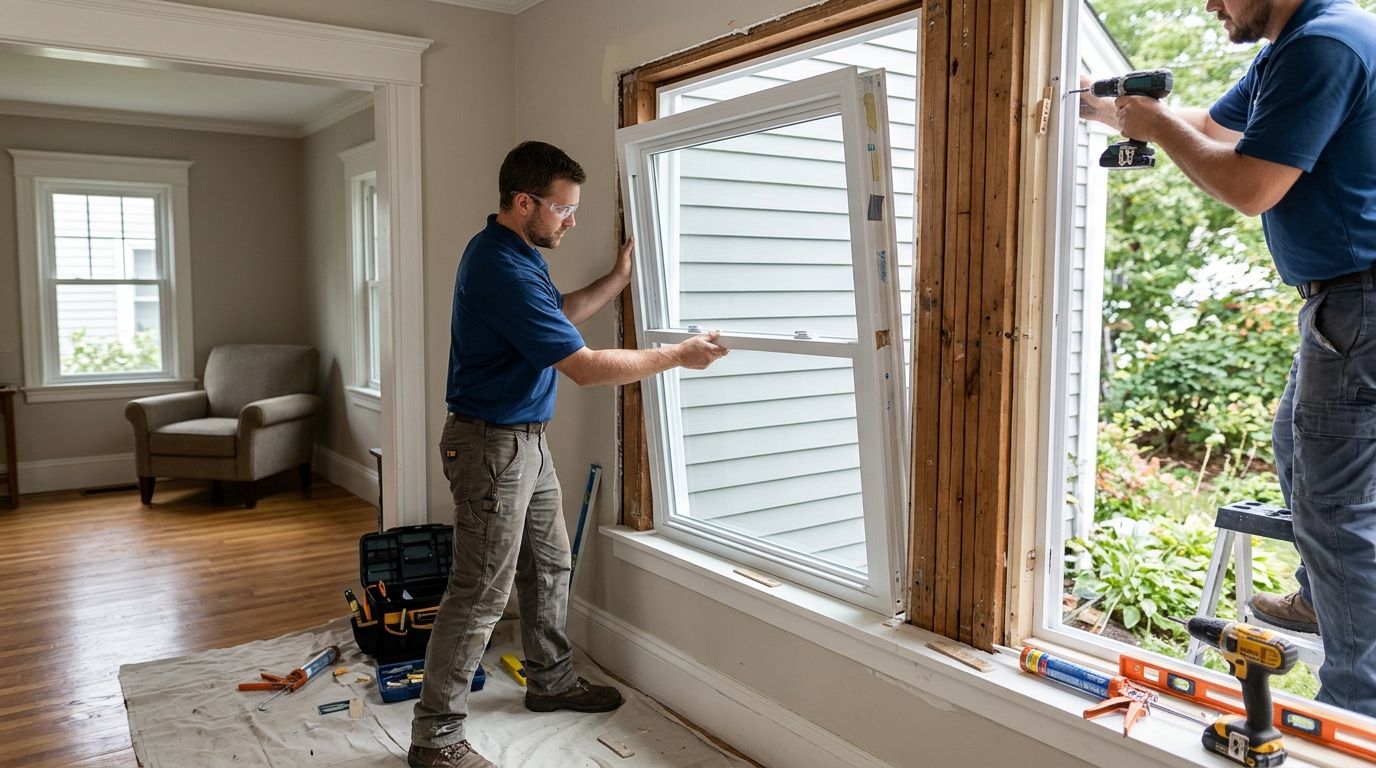
An insert replacement fits within an existing window frame. That approach depends on the retained frame being sound, suitable for the new unit, and free of unresolved water damage.
The advantage is a narrower removal scope. The trade-off is that the contractor does not expose the entire opening, and the added frame can reduce visible glass area. Ask to see how the proposed unit changes the opening before approving it.
For a 2026 window replacement quote, require the contractor to identify exactly which parts stay. Terms such as replacement window do not, by themselves, explain whether the old frame, trim, or sill remains.
Choose an insert only after the retained frame has been assessed. If the explanation stops at less disruption, ask how the contractor ruled out hidden damage and existing leakage.
Full-frame replacement: best for damaged frames or suspect openings
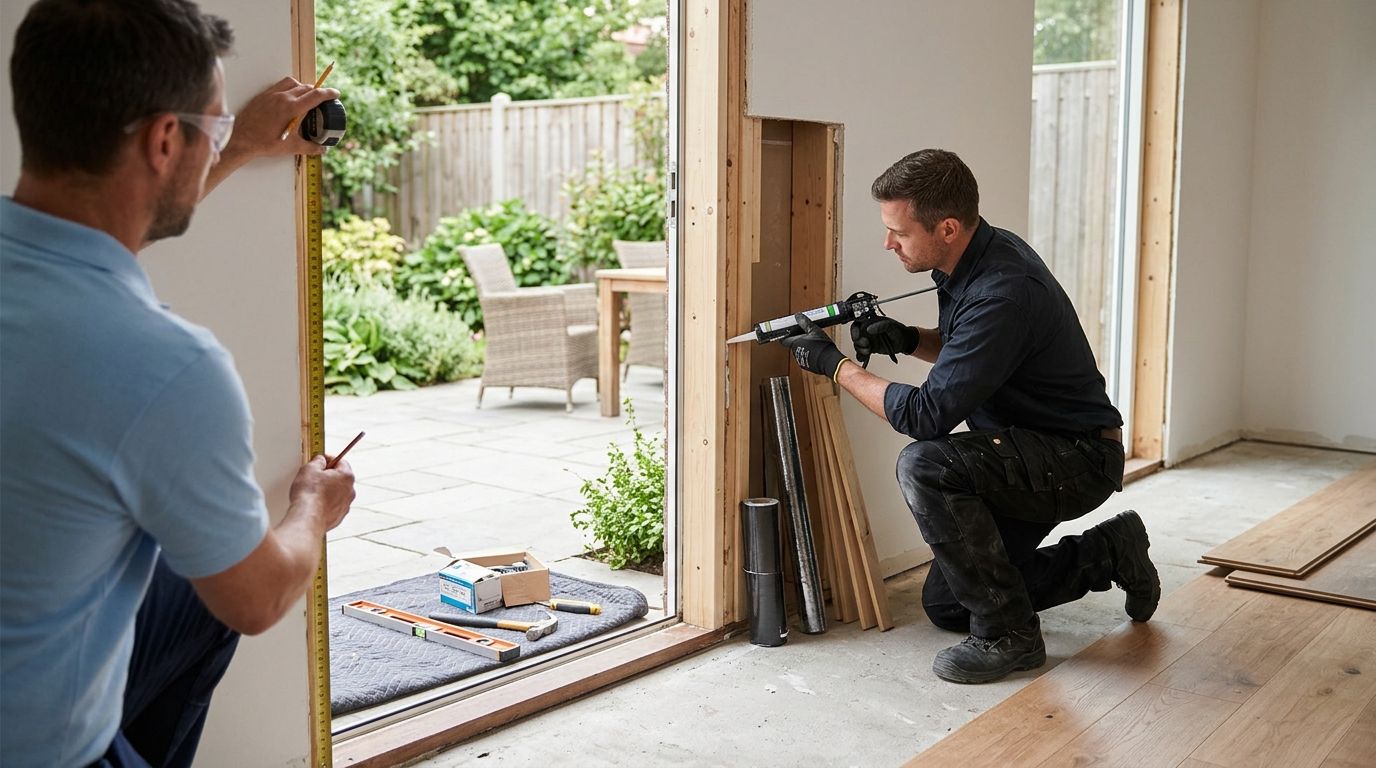
Full-frame replacement removes the existing window frame and gives the installer access to the surrounding opening. That access matters when the frame has deteriorated or the connection between the window and wall needs correction.
The broader scope also creates more restoration work. Interior trim, exterior trim, siding connections, and finish surfaces need attention. The quote should say which of those tasks are included and who completes them.
Opening the wall connection does not make concealed damage predictable. Ask how the contractor documents unexpected conditions, explains the repair, and obtains approval before additional work proceeds.
Choose full-frame replacement when keeping the old frame would leave the underlying problem in place. Do not accept a broader removal scope without a matching explanation of flashing, sealing, and finish work.
Why the right window replacement approach varies
The right approach depends on what is failing and what you need the finished window to do. These factors should shape the inspection and written scope:
- Frame condition: Soft wood, deterioration, distortion, and damaged joints affect whether existing components can remain.
- Moisture location: Room-side condensation, moisture between panes, and water entering around the opening require different responses.
- Operation and safety: A window should open, close, and lock as intended. Bedroom replacement choices also need attention to applicable emergency escape requirements.
- Wall connections: Siding, trim, flashing, and the opening around the window affect how water is managed.
- Glass performance: Insulation, solar heat gain, and visible light are separate characteristics. Compare published ratings for the actual unit being quoted.
- Finish expectations: Keeping existing trim and replacing it are different scopes. State what you expect the finished interior and exterior to include.
A useful proposal connects each recommendation to one of these conditions. A list of features without an explanation of your window's problem does not establish that replacement is necessary.
How do you check your windows before requesting a quote?
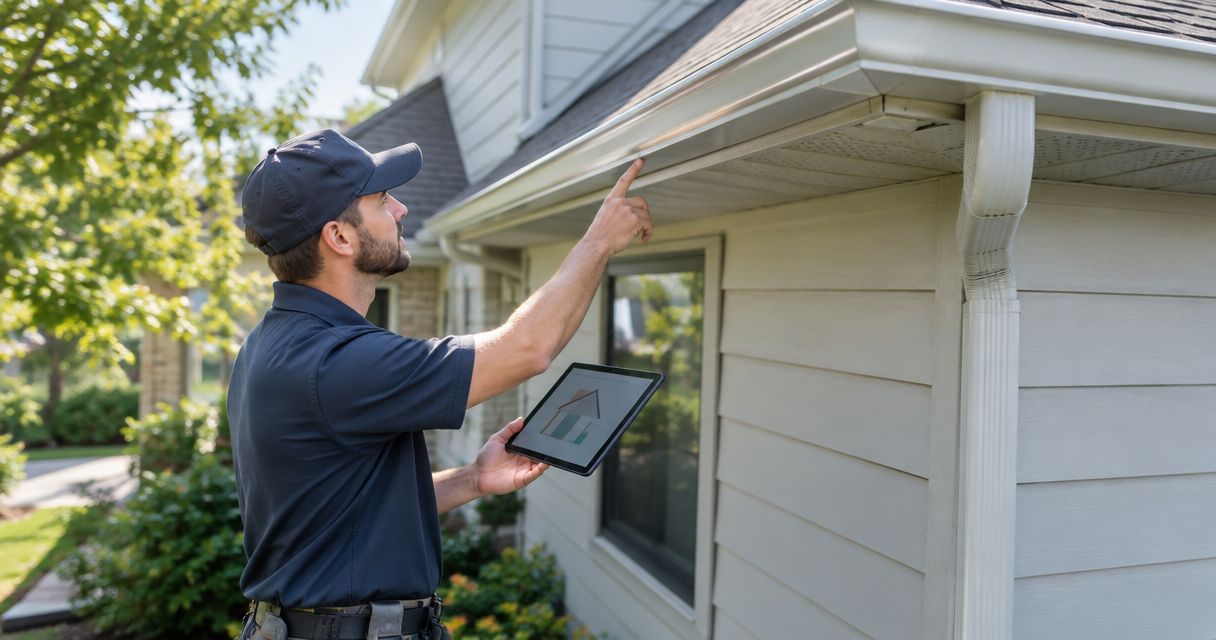
Inspect 3 locations: the glass, the frame, and the surrounding wall. Stay on the ground or use a safe indoor position; leave exterior work at height to a qualified contractor.
- Check the glass. Record cracks, persistent fog between panes, or moisture that wipes off the room-side surface. Those observations describe different problems.
- Check the frame. Note visible deterioration, gaps, damaged weatherstripping, and difficulty operating the sash. Do not force a stuck window.
- Check the wall. Look for staining, peeling finishes, or damaged trim around the opening. Photograph the location and note whether it follows rain, snowmelt, or indoor condensation.
- Record the pattern. Identify which rooms are affected and whether trouble changes with weather or daily use. Give the contractor that information during the inspection.
Your notes help focus the visit; they do not replace an inspection. Ask for the cause of the problem before asking which window to buy.
What should your window replacement quote explain?
A useful 2026 proposal describes the work, not just the window. Ask Liberty Exteriors or another window installation contractor to put the following details in writing so you can compare equivalent scopes.
- The window manufacturer, model, operating style, glass package, and published ratings.
- Whether the project uses insert or full-frame replacement, including what remains in place.
- How the installation handles flashing, air sealing, and connections to the surrounding wall.
- Which trim, siding repairs, painting, or staining are included or excluded.
- How concealed damage is documented and changes are approved.
- Who handles disposal, protection of nearby surfaces, and final cleanup.
- Which documents cover the product warranty and the workmanship warranty.
Product warranties and workmanship warranties are not interchangeable. A product warranty addresses covered product issues under its terms; workmanship coverage addresses covered installation work under its separate terms. Read the exclusions and claim process for each.
Keep the proposal, product information, approval records, and warranty documents together. If something changes during installation, the updated scope belongs in that file too.
Should you replace every window at once?
You do not need to replace every window because one has failed. Assess each opening, then decide whether a whole-home project or staged work fits the condition of the windows and your renovation plans.
Staging lets you prioritize damaged or troublesome openings. Its trade-off is the need to coordinate future work, including appearance, trim details, and connections to other exterior projects. Ask whether the proposed sequence creates work that must be repeated later.
For a staged 2026 project, mark the openings included in the current quote. Room names alone can be ambiguous when a room has several windows.
Will new windows stop condensation?
New windows do not guarantee the end of condensation. Moisture on the room-side glass depends on indoor humidity and surface temperature as well as the window's performance.
Moisture between panes is different: it indicates a problem within the sealed glass assembly. Water appearing around trim needs a separate investigation. Identify which kind of moisture you have before treating replacement as the solution.
Should you coordinate windows with other exterior work?
Coordinate window work with siding or trim work when they share the same wall connections. The contractor should explain the sequence so flashing and finishes connect properly without unnecessary removal later.
Roofing and gutters also deserve inspection when the source of water near a window is uncertain. Doors, decks, and sunrooms need coordination when their placement or construction affects the same wall. These are reasons to plan the work together—not reasons to replace sound materials.
Liberty Exteriors provides window installation alongside siding, roofing, doors, gutters, decks, and sunrooms. For homeowners planning connected exterior work, that service range is relevant; the written proposal still needs to identify the work included at each opening.
FAQ
How do I know if my Eau Claire windows need replacement?
Replacement deserves consideration when frames are damaged, operation cannot be restored with a practical repair, or the existing installation needs correction. Have the contractor identify the cause before selecting the replacement approach.
Is it worth replacing windows just because they are old?
Age alone does not justify window replacement. Assess condition, operation, moisture problems, and whether repair addresses the defect.
Can I replace foggy window glass without replacing the frame?
Glass replacement is an option when the sealed glass assembly has failed and the surrounding window remains serviceable. Ask whether the sash and frame are suitable for retaining.
Are triple-pane windows always the best choice in Eau Claire?
Triple-pane windows are not automatically the best choice for every opening. Compare the actual product's published ratings, fit, operating requirements, and installation scope rather than pane count alone.
What is the difference between insert and full-frame window replacement?
Insert replacement retains the existing frame, while full-frame replacement removes it. The condition of that frame and the surrounding opening should determine which approach is appropriate.
Can replacing windows fix water stains around the trim?
Window replacement fixes water entry only when the work addresses its actual source. Have the contractor inspect the window-to-wall connection and surrounding materials before defining the repair.
What warranty questions should I ask a window installer?
Ask separately about the product warranty and the workmanship warranty. Get the coverage terms, exclusions, claim process, and responsible contact in writing.
One last thing
Before signing a 2026 window proposal, ask: What problem will remain after this work is finished? The answer exposes scope gaps more clearly than another feature list. A glass-only repair leaves the frame in place; an insert leaves the retained opening largely unexposed. Know what the project will—and will not—change.