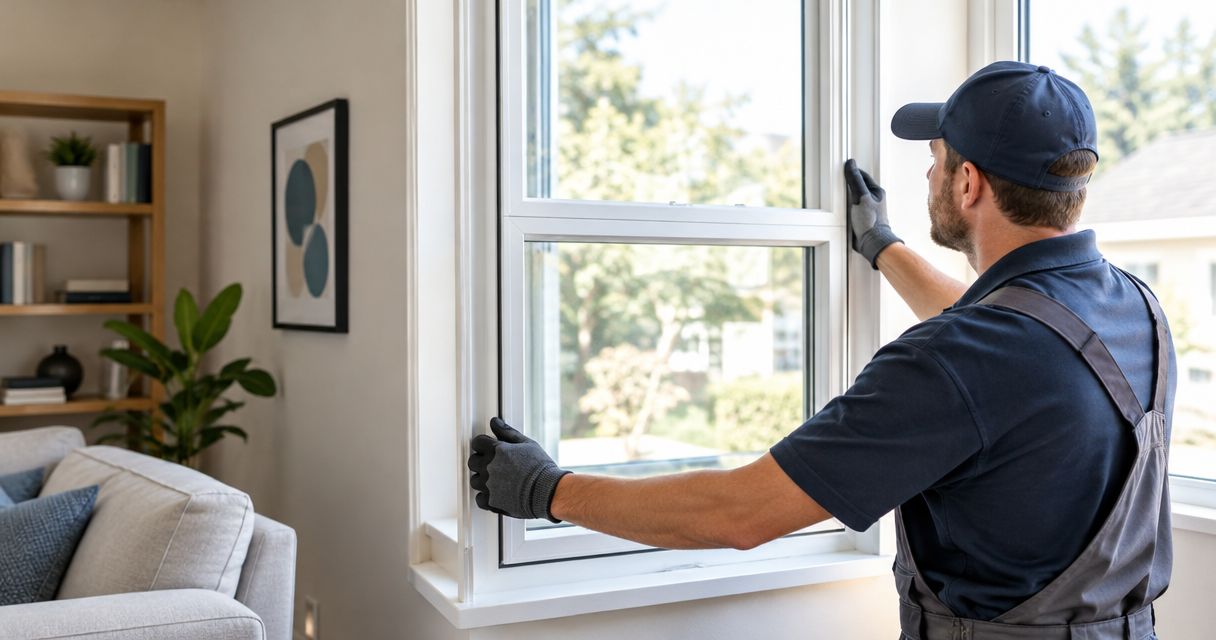
Yes, replacement window installation can address drafts when air leaks through worn window parts or gaps around the frame. The work must address the actual leak, not just replace the glass or sash. A cold feeling beside a window can also come from cold glass or a nearby wall leak, so identify the source before choosing the installation scope.
- Replacement window installation addresses drafts when the work fixes leaking window parts and gaps around the opening.
- Insert replacement keeps the existing frame; full-frame replacement exposes more of the surrounding opening.
- Cold glass does not automatically mean outdoor air is entering your home.
- Liberty Exteriors serves Eau Claire and Chippewa Valley homeowners seeking window installation and other exterior improvements.
Can replacement window installation address drafts?
Replacement window installation addresses drafts only when the installation includes the path where air enters. A new window does not automatically correct a gap behind retained trim, a damaged existing frame, or leakage from the adjoining wall.
Start by separating the possible sources. These observations help explain what you feel, but they do not replace an inspection.
| Where you notice the problem | What to check | What the work needs to address |
|---|---|---|
| Along the moving sash | Weatherstripping, locks, alignment and closure | Repairable parts or replacement of the window unit |
| Between the window and interior trim | Gaps around the frame and opening | Appropriate insulation and air sealing |
| Across the glass surface | Cold glass and downward movement of room air | Window performance, not necessarily an air leak |
| At a damp or deteriorated sill | Water entry and frame condition | The moisture source and damaged materials |
| Beyond the window trim | Nearby wall, door or other exterior gaps | The actual opening where air enters |
Liberty Exteriors is best for Eau Claire homeowners seeking a local replacement window installation contractor. The company has served the area since 1984 and provides other exterior installation services when the concern extends beyond the windows.
Why this matters
Replacing a window without identifying the leak leaves an important question unanswered: did the work remove the cause of the discomfort? For your 2026 project, ask the installer to explain both the window condition and the surrounding opening before recommending a replacement method.
Keep water and air problems separate. Air sealing limits unwanted airflow; flashing and drainage details manage water. A sound installation needs both, but one does not substitute for the other.
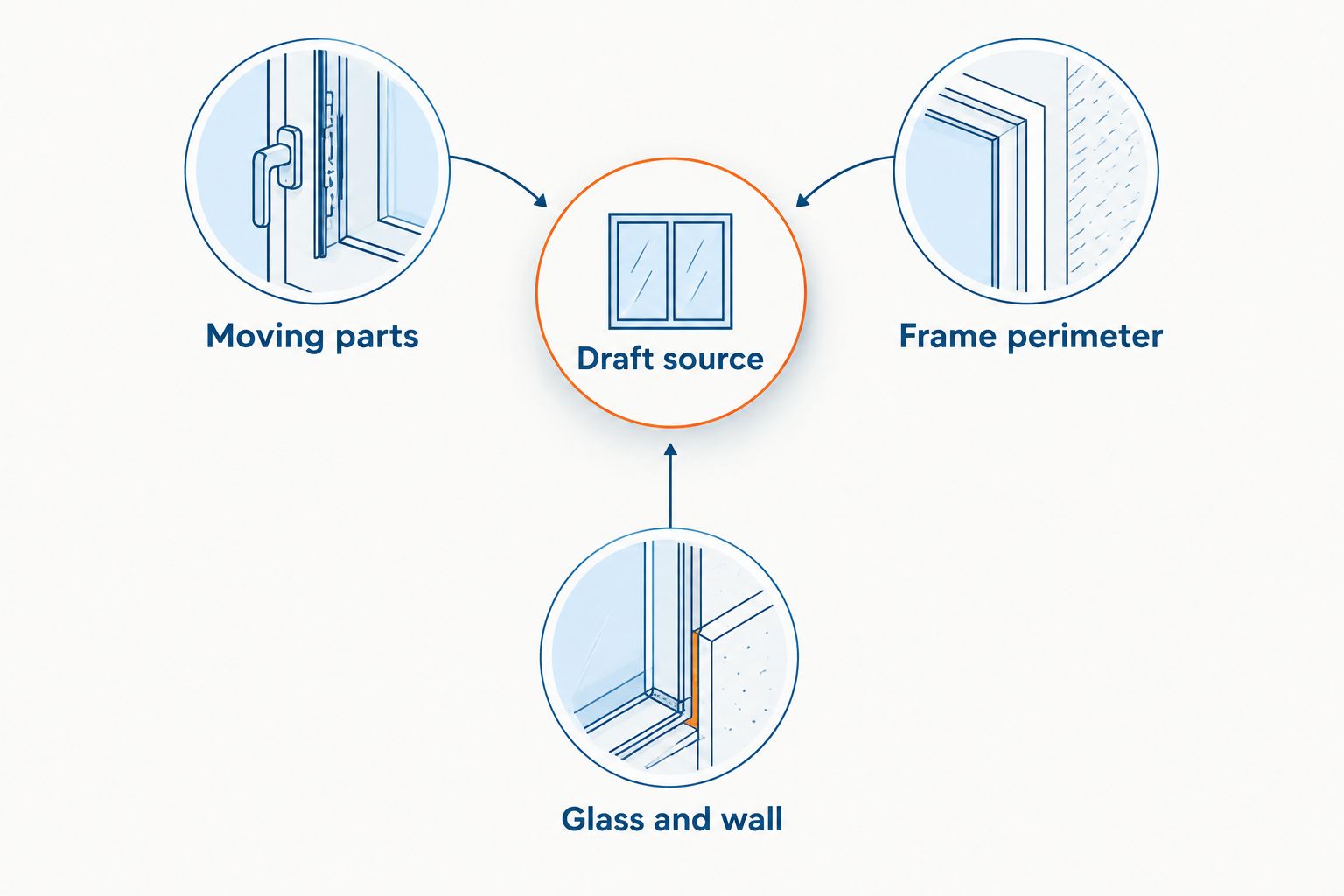
Check 3 places before choosing the work
You do not need to remove trim or dismantle a window to gather useful observations. Check the following locations from indoors, and leave concealed conditions to the installer.
Moving parts
Close and lock the window normally. Look for damaged weatherstripping, uneven gaps, or a sash that does not sit squarely in its frame. Do not force a stuck lock or sash.
Note whether the draft changes when the window is fully latched. That observation helps the installer distinguish an operating problem from leakage around the outside of the frame.
Frame perimeter
Move your hand along the interior trim and sill, noting where you feel moving air. A lightweight tissue can help show airflow, although it does not measure leakage or identify a concealed path with certainty.
Record the location rather than applying caulk immediately. Covering a visible gap without understanding its purpose can conceal a larger problem or interfere with drainage if sealant reaches the wrong exterior opening.
Glass and adjoining wall
A cold pane can cool nearby indoor air, which then falls toward the floor. That movement can feel like a draft even when outdoor air is not passing through the window.
Compare the sensation at the center of the glass with what you feel at the sash edges and trim. Also note discomfort near a door, electrical outlet, or wall corner so the inspection does not focus too narrowly on the window.
For a useful 2026 inspection record, write down which room feels uncomfortable and the weather when you notice it. Wind-related leakage and discomfort beside cold glass are different observations; give the installer both rather than assuming they have the same cause.
Compare 2 replacement installation scopes
The main choice is often whether to retain the existing frame or remove it. The full-frame or insert replacement window installation guide explains that decision in more detail.
Neither method is automatically the right answer for drafts. The condition of the existing frame and access to the leaking area matter more than the label.
| Installation approach | Best for | Main advantage | Main limitation |
|---|---|---|---|
| Insert replacement | A sound existing frame that suits the proposed installation | Retains more surrounding materials | Retained parts can limit access to concealed gaps or damage |
| Full-frame replacement | Frames or surrounding details that need removal and correction | Exposes more of the opening for inspection and repair | Disturbs more trim and surrounding finishes |
Insert replacement: retain a sound frame
Insert replacement places a new window within the retained frame. It is a practical choice when that frame is sound and the installation can address the identified air leakage.
The limitation is access. If the leak travels behind retained components, replacing the operating window alone does not explain how that leak will be sealed. Ask which existing parts stay and how the installer will address the perimeter.
Full-frame replacement: inspect the opening
Full-frame replacement removes the existing window frame and exposes more of the surrounding opening. That access supports inspection of concealed gaps, damaged wood and water-management details.
The trade-off is greater disturbance to trim and finishes. Ask what restoration is included and how siding or interior trim will meet the new window. Choose full-frame replacement for a condition that requires it, not simply because a room feels cold.
Why draft-control results vary
A window's features matter, but the finished opening determines whether air can still pass around it. These factors explain why two replacement projects can produce different comfort results:
- Leak location: Air entering through a sash requires different work from air entering behind trim.
- Existing frame condition: Decay, distortion or loose components affect whether retaining the frame makes sense.
- Installation access: Concealed gaps remain difficult to correct when the necessary areas stay covered.
- Window operation: Alignment, weatherstripping and working locks help the window close as intended.
- Perimeter sealing: The space between the window assembly and wall needs suitable insulation and air sealing.
- Nearby conditions: Cold glass or leakage elsewhere in the room can leave discomfort after the window work.
For a 2026 replacement window installation proposal, ask for an explanation tied to your opening rather than a general promise of fewer drafts. A useful recommendation identifies what stays, what comes out and where the air barrier will be completed.
Use 4 checks when comparing installation proposals
A product brochure cannot describe all the work at your house. Compare the installation scope in writing, especially where the new window meets existing materials.
- Diagnosis: Ask where the installer believes the air enters and what observations support that conclusion. If the source remains uncertain, ask what further inspection would resolve it.
- Removal: Confirm whether the proposal retains or removes the existing frame, trim and sill components. Ask how concealed damage will be documented and handled if it appears.
- Sealing and drainage: Ask how the perimeter will be insulated and air-sealed, and how exterior water will drain. The explanation should distinguish these tasks rather than treating caulk as the entire installation.
- Completion: Confirm who restores disturbed trim, checks window operation and explains maintenance. Request the product warranty and any separate workmanship warranty in writing.
A product warranty is not the same as a workmanship warranty. The product warranty describes the manufacturer's coverage; a workmanship warranty describes the installer's stated coverage for installation work. Read each document for exclusions and claim requirements instead of assuming one covers everything.
When discussing a 2026 project with Liberty Exteriors, describe the uncomfortable locations and ask which installation scope addresses them. Include visible staining, soft trim or operating problems so the conversation covers more than the appearance of the replacement window.
Discuss your window installation needs
Describe the drafts, frame condition and surrounding repairs you want addressed.
Should you repair a drafty window before replacing it?
Repair comes first when a serviceable window has an identifiable, repairable fault. Worn weatherstripping, an adjustment issue or a localized sealant failure does not by itself establish that the entire window needs replacement. Ask whether a repair would address the observed problem and what limitations would remain.
Replacement deserves a separate discussion when the window or frame is deteriorated, operation remains poor, or the proposed repair leaves the underlying problem unresolved. Avoid treating repeated patches as proof that another patch is the right answer.
Will replacement windows stop every cold spot in a room?
Replacement windows do not address every source of room discomfort. Air leakage elsewhere, wall insulation, heating distribution and cold interior surfaces can all affect how a room feels. Ask the installer to distinguish the window's contribution from conditions outside the proposed work.
That distinction protects your expectations. A window installation proposal should describe the conditions it addresses without promising that an entire room will become uniformly comfortable.
Should nearby exterior work be included?
Include adjacent work when it affects the opening, drainage or access—not simply because several exterior projects are on your list. Siding and window trim need coordinated details, while doors deserve their own frame and weatherstripping inspection.
Roofing and gutters matter when water is reaching the wall or opening. Deck and sunroom plans also need coordination where they meet existing walls, windows or doors. Liberty Exteriors provides these exterior installation services, but the inspection should determine which work belongs in the project.
FAQ
Can replacement window installation stop drafts around the trim?
Replacement window installation can address drafts around the trim when the scope includes the leaking perimeter. Replacing only the sash or window unit does not automatically seal concealed gaps behind retained materials.
How can I tell whether my window leaks air or just feels cold?
Check whether you feel moving air at the sash edges or trim rather than only beside the glass. Cold glass can create downward movement of indoor air, so an inspection should distinguish that sensation from outdoor air leakage.
Is full-frame replacement better than insert replacement for drafts?
Full-frame replacement provides more access to the opening, but it is not automatically necessary for every draft. Insert replacement suits a sound retained frame when the installation can address the identified leak.
Do I need to replace every window if only one room feels drafty?
A draft in one room does not establish that every window needs replacement. Identify the affected openings and compare their condition before deciding the project scope.
Can caulking fix a drafty window?
Caulking can address an appropriate stationary joint, but it does not correct every window draft. Moving parts, failed weatherstripping, frame damage and concealed gaps require different attention; drainage openings must remain clear.
Does a window warranty cover installation problems?
A product warranty does not automatically cover installation problems. Review the manufacturer's terms and any separate workmanship warranty to understand responsibility, exclusions and the claim process.
What should I ask before scheduling window installation in 2026?
Ask where the draft enters, which existing parts will remain and how the opening will be sealed. Also confirm how concealed damage, disturbed trim and final operation checks will be handled.
One last thing
Show the installer the draft before the old window comes out. Point to the exact edge, sill or trim joint where you feel it and explain when it occurs. Once removal starts, that original clue becomes harder to demonstrate.
Keep those observations with your proposal. At completion, check that each window opens, closes and locks normally, then ask the installer to explain the finished perimeter and any conditions outside the agreed work.