Yes—removing old shingles before asphalt shingle installation is usually the better choice because it exposes the roof deck for inspection and lets the installer address damaged materials before covering them. Installing shingles over an existing layer leaves concealed problems harder to assess and is an option only when the existing roof, applicable building requirements, and the new shingle manufacturer’s instructions allow it.
- For asphalt shingle installation, tear-off exposes the roof deck and allows hidden damage to be addressed.
- A roof overlay reduces removal work but leaves the existing roofing beneath the new shingles.
- Liberty Exteriors provides roofing installation for Eau Claire and Chippewa Valley homeowners.
- Before approving a 2026 roofing proposal, confirm removal, deck repairs, flashing, ventilation, and warranty responsibilities.
For homeowners in Eau Claire and the Chippewa Valley, Liberty Exteriors provides roofing installation alongside other exterior improvement services. Liberty Exteriors is a fit for local homeowners seeking an exterior installation contractor rather than a materials-only supplier.
Should old shingles be removed before a new roof?
Choose removal when you need to establish the condition of the roof deck and rebuild the roofing layers from a sound surface. An overlay adds new shingles over existing shingles; it does not remove the old materials or provide the same access for inspection.
The decision involves 2 approaches: tear-off and overlay. Their main trade-off is access to the underlying roof versus avoiding the work of removing existing shingles.
| Approach | Best for | Main advantage | Main limitation |
|---|---|---|---|
| Tear-off | Homeowners who need the underlying roof inspected and repaired | Exposes the deck and allows replacement of underlying roofing materials | Requires removal, debris handling, and protection while the roof is open |
| Overlay | An existing roof confirmed suitable under applicable requirements and manufacturer instructions | Avoids removing the existing shingle layer | Leaves concealed conditions beneath the old roofing and adds weight |
An overlay is not a substitute for investigating leaks, soft decking, or an uneven roof surface. If a contractor recommends covering the existing roof, ask what inspection supports that recommendation and what remains inaccessible.
Why this matters
A roof is more than the shingles you see from the driveway. The supporting deck, underlayment, flashing, ventilation, and drainage details all affect how the roof manages water and moisture.
For a 2026 roof replacement in west central Wisconsin, the useful question is not simply whether new shingles can fit over old ones. Ask whether the proposed work addresses the condition of the roof underneath, including details affected by snow, ice, and repeated freezing and thawing.
Removal provides access, not an automatic guarantee of quality. A tear-off still needs sound workmanship, appropriate materials, and installation that follows the selected roofing system’s instructions.
Tear-off: best for inspecting and repairing the roof underneath
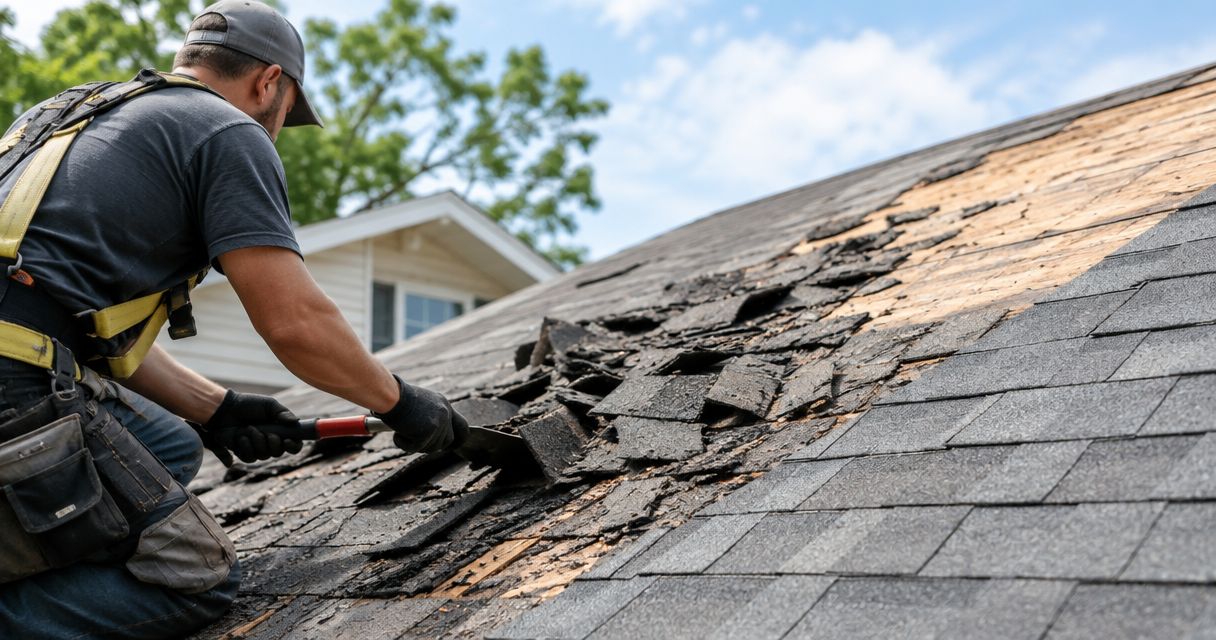
A tear-off removes the existing shingles so the installer can assess the surface that supports the new roof. Depending on the agreed scope, the work also involves removing underlying roofing materials and addressing flashing details.
That access matters when water stains, damaged shingles, or uneven areas suggest a problem below the surface. Removing the covering lets the contractor assess exposed decking instead of relying only on what is visible from outside or inside the attic.
What removal makes possible
- Deck inspection: Check exposed sheathing for deterioration, damage, and unsuitable fastening surfaces.
- Deck repairs: Replace damaged sections before attaching the new roofing.
- Underlayment installation: Install the specified materials against the prepared roof surface.
- Flashing assessment: Examine transitions at walls, chimneys, valleys, and roof openings.
- Surface preparation: Address loose fasteners and uneven areas before shingle installation.
The disadvantage is disruption. Removal creates debris and temporarily exposes the roof, so the proposal should explain property protection, weather protection, disposal, and cleanup.
Choose tear-off for access and repairability—not because removing shingles alone makes a roof dependable. The preparation and installation that follow determine whether that access is put to good use.
Overlay: best only for a roof confirmed suitable for covering
An overlay places a new shingle layer over the existing roofing. It reduces removal work, but it preserves the old layer and the limitations that come with it.
The existing surface must be suitable for the proposed installation. Curling shingles, significant unevenness, unresolved leaks, or concerns about the supporting structure need investigation rather than another covering.
Before accepting an overlay in 2026, request a clear explanation of how the proposal meets applicable requirements and the selected manufacturer’s instructions. Permission under a building rule does not, by itself, establish that a particular roof or shingle product is suitable.
What an overlay does not solve
An overlay does not replace deteriorated decking hidden beneath the old shingles. It also does not automatically correct failed flashing, attic moisture problems, or poor drainage at roof edges.
Fastening needs attention because the new shingles must attach as required through the existing materials. The contractor should explain how the proposed fasteners and installation method meet the product instructions.
Treat an overlay as a condition-dependent option, not the default shortcut. If the explanation focuses only on avoiding removal and leaves roof condition unanswered, request a more complete assessment.
Why the removal decision varies
The right scope depends on the roof you have, not just the shingles you want. These 5 factors should guide the recommendation:
- Existing layers: The current roofing buildup affects weight, fastening, and whether an additional covering is permitted.
- Deck condition: Soft areas, deterioration, and damaged sheathing require investigation and repair rather than concealment.
- Leaks and moisture: Water stains and attic dampness call for finding the source, including flashing or condensation problems.
- Surface condition: Curled shingles, uneven areas, and damaged roof details affect the suitability of the base beneath new shingles.
- Installation requirements: Applicable building rules and the selected manufacturer’s instructions govern the acceptable installation method.
Roof appearance alone does not settle these questions. A roof can look reasonably flat from the yard while having damaged sheathing or moisture problems beneath the covering.
Ask the contractor to separate observed conditions from conditions that cannot be confirmed until removal. That distinction keeps the recommendation honest without pretending every concealed detail is already known.
What should a 2026 roof replacement proposal explain?
Use these 5 checkpoints to compare the work being proposed. A material name and a total are not enough to establish whether competing proposals cover the same job.
- Removal scope. Identify whether the work includes tear-off or overlay, which existing materials will be removed, and who handles disposal.
- Deck repairs. Explain how damaged decking will be documented, how you will authorize additional work, and how replacement materials will be specified.
- Water protection. Identify underlayment, flashing, roof-edge details, and treatment of penetrations and roof-to-wall connections.
- Ventilation review. Explain whether the existing attic ventilation will be assessed and what changes, if any, are included.
- Site protection. Describe how the crew will protect landscaping, siding, windows, doors, gutters, decks, and sunrooms near the work area.
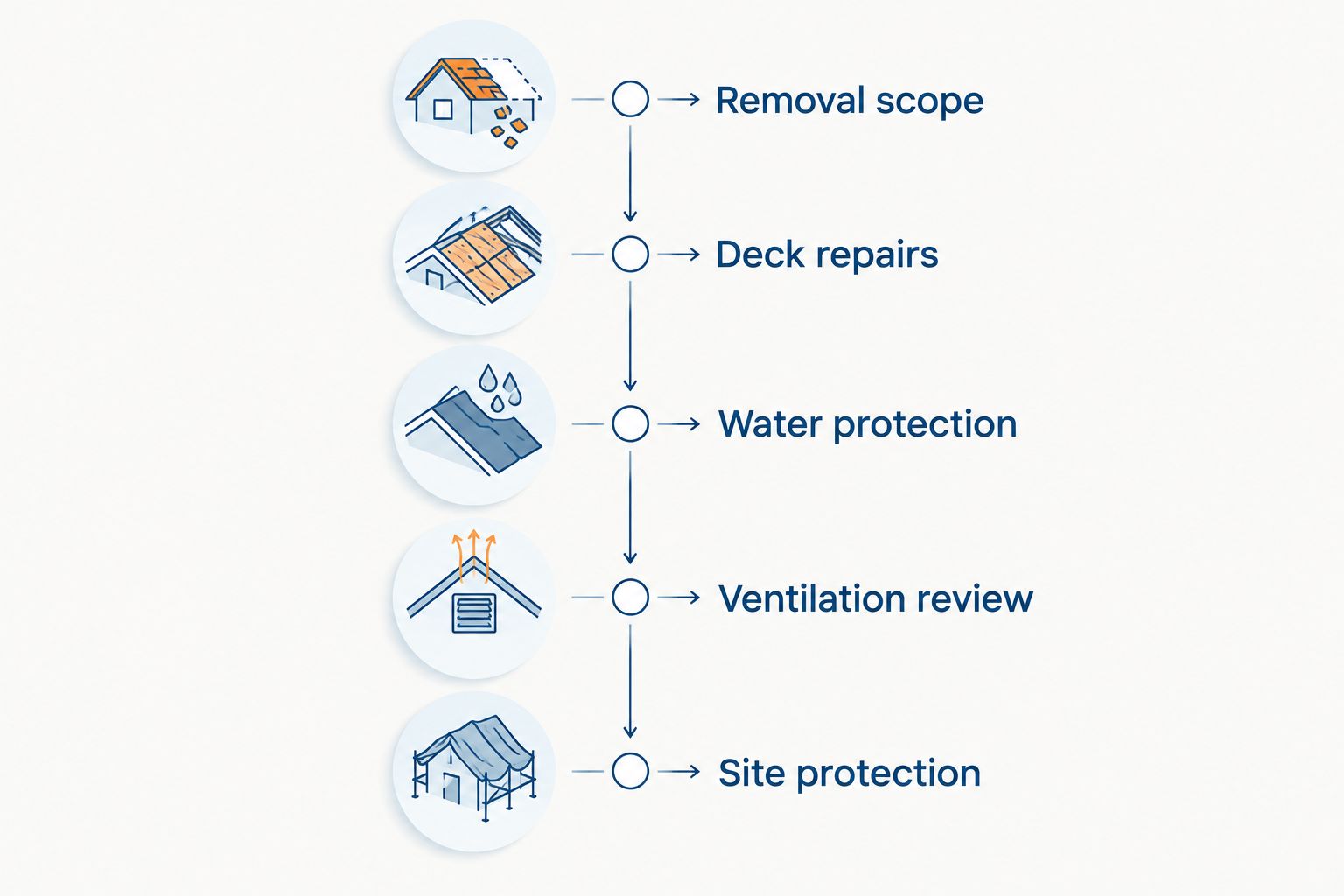
Ask who makes the decision when the crew uncovers damaged decking. The proposal should establish how you will see the problem and approve the repair before it is covered.
Also ask how the roof will be protected if weather interrupts the work. Avoid assuming that every contractor uses the same process or includes the same cleanup responsibilities.
How should roofing warranties affect the decision?
A product warranty and a workmanship warranty cover different responsibilities. A manufacturer’s warranty concerns the roofing product under its written terms; a workmanship warranty concerns installation work under the contractor’s written terms.
For a 2026 proposal, request the documents that apply to the actual product and installation method. Do not assume an overlay automatically cancels every warranty, or that a tear-off automatically qualifies for every available warranty.
Ask these questions before signing:
- Does the selected manufacturer permit installation over the existing roofing under these conditions?
- Which installation requirements must be met for the stated product coverage?
- What installation issues does the contractor’s workmanship coverage address?
- Who receives a claim, and what documentation should you keep?
A verbal statement that the roof is covered leaves too much unclear. Keep the signed scope, product identification, warranty documents, and any approved changes together.
Can new shingles be installed over old shingles?
New shingles can be installed over old shingles only when the existing roof is suitable and applicable requirements and product instructions permit it. An overlay still needs an assessment of the existing layers, supporting roof, surface condition, and fastening method.
Ask for the reason an overlay suits your particular roof. Avoid treating another homeowner’s successful overlay as evidence about conditions beneath your shingles.
Does removing shingles fix a leaking roof?
Removing shingles exposes areas that help the contractor investigate a leak, but removal itself does not fix the source. The repair must address the failed detail, whether it involves damaged materials, flashing, a penetration, or another water-entry point.
Describe where and when you notice the leak. Water can travel before it becomes visible indoors, so the stain location does not necessarily identify the entry point.
Should gutters be replaced when the roof is replaced?
Gutters should be assessed during roof planning, but roofing work does not automatically require gutter replacement. Their condition, attachment, drainage, and relationship to the roof edge determine whether separate work is needed.
Ask how existing gutters will be protected during tear-off and whether roof-edge changes affect drainage. This is also the time to identify nearby siding, window, door, deck, or sunroom details that need protection or coordination.
FAQ
Is removing old shingles better for asphalt shingle installation?
Removing old shingles is usually better for asphalt shingle installation because it exposes the deck for inspection and repair. An overlay leaves the old covering in place and requires confirmation that the roof and proposed installation meet applicable requirements.
Can a contractor tell whether my decking is damaged without removing shingles?
A contractor can identify some warning signs before removal, but concealed decking cannot be fully assessed through the existing roofing. Attic observations and exterior inspection help guide the assessment; exposed decking allows a more direct inspection.
Will new shingles stop an existing roof leak?
New shingles do not necessarily stop an existing leak if the source is failed flashing, a roof penetration, or another unresolved detail. The installation scope should identify and address the cause rather than simply cover the surrounding area.
Does a roof overlay void the shingle warranty?
A roof overlay does not have a universal warranty outcome. Check the selected manufacturer’s written terms and installation instructions for the proposed roof assembly, and keep product coverage separate from workmanship coverage.
What should I ask before signing a roofing proposal in 2026?
Ask whether the proposal includes removal, deck inspection, repair authorization, underlayment, flashing, ventilation assessment, disposal, and property protection. Confirm which responsibilities and exclusions appear in writing rather than relying on a verbal summary.
Does Liberty Exteriors provide roof installation in Eau Claire?
Liberty Exteriors provides roofing installation for residential and light commercial customers in Eau Claire, the Chippewa Valley, and west central Wisconsin. Ask for a project-specific assessment that explains the recommended installation scope and any conditions requiring further inspection.
One last thing
The most useful roofing photo is often taken after removal and before the new materials cover the deck. Ask the contractor to document damaged areas and completed repairs so you can understand what changed beneath the finished shingles.
For your 2026 roofing project, make that request before work starts. A clean-looking finished roof cannot show you the condition of the decking, the repairs underneath, or every flashing detail that was covered during installation.