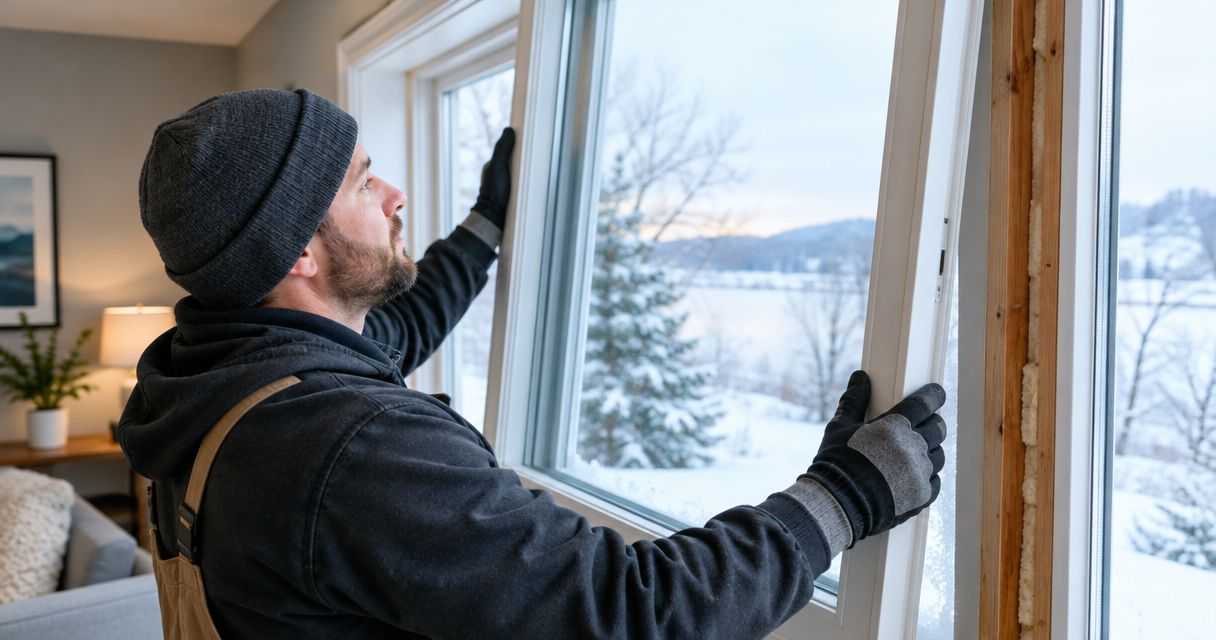
Yes, you can replace windows in winter in Eau Claire when the crew can work safely and the installation materials can be used under the actual job-site conditions. Cold weather alone does not rule out the job, but snow, ice, wet openings, and sealant requirements can require a different work plan or a postponement.
- Window replacement Eau Claire: winter installation requires safe access, dry openings, and materials suited to the conditions.
- Insert replacement keeps a suitable existing frame; full-frame replacement exposes more of the opening for inspection.
- Ask how the crew will protect each opening and handle weather delays before scheduling.
- Liberty Exteriors serves Eau Claire homeowners seeking local window replacement installation.
Can you replace windows in winter in Eau Claire?
Yes. The deciding factor is whether the installer can complete the entire weather-resistant installation correctly—not simply remove the old window and fit the new one. That includes preparing the opening, securing the window, insulating the surrounding gap, and completing the water-management details.
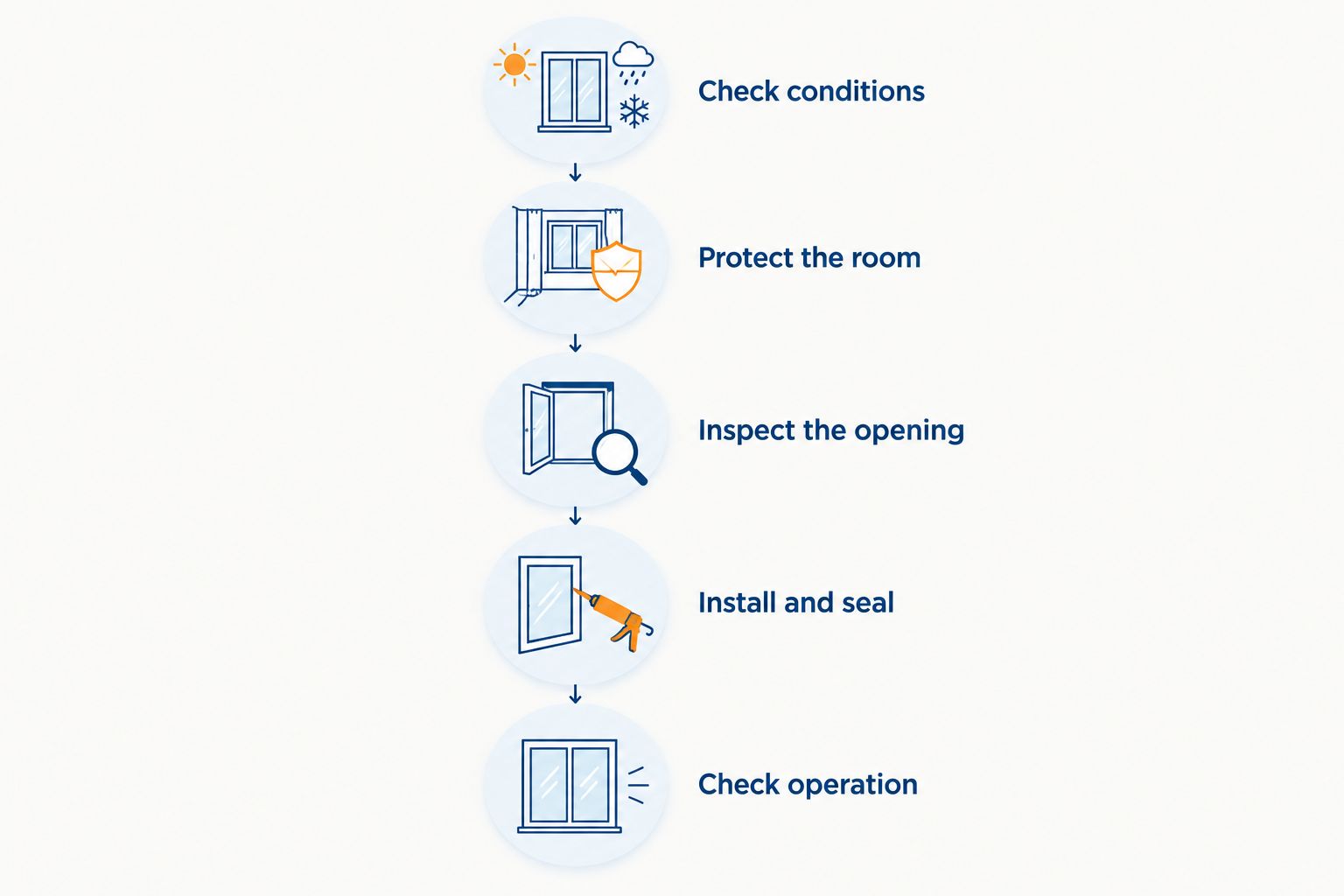
For a 2026 winter project, ask the installer to explain the following sequence before agreeing to a start date:
- Check conditions. Review the forecast, access, and the application requirements for the actual installation materials.
- Protect the room. Establish how floors, furnishings, and the work area will be protected while the opening is exposed.
- Inspect the opening. Check the existing frame and surrounding materials after removal, rather than assuming everything underneath is sound.
- Install and seal. Follow the window manufacturer's instructions and the requirements for flashing, insulation, and sealants.
- Check operation. Confirm that the window opens, closes, and locks properly, and review any unfinished work before the crew leaves.
Liberty Exteriors is a local window replacement contractor for homeowners in Eau Claire and the Chippewa Valley. You can start with Liberty Exteriors when discussing your home's windows and the installation work involved.
Why this matters
A winter installation exposes part of your home to outdoor conditions while work is underway. The important question is how the contractor controls that exposure without rushing the details that keep water and air out afterward.
A window that fits the opening still needs proper support, attachment, insulation, and water management. A rushed seal is not an acceptable trade for closing the opening sooner.
Separate temporary disruption from the finished result. An open window opening lets cold air into the room during installation; a properly completed replacement should not leave an ongoing draft around the installation joint.
Which replacement approach fits your existing windows?
Winter does not determine whether you need an insert or a full-frame replacement. The condition of the existing window frame and surrounding opening should drive that decision.
These approaches involve different amounts of removal. Neither is automatically the right choice just because the work is scheduled during cold weather.
| Approach | Best for | Main advantage | Main limitation |
|---|---|---|---|
| Insert replacement | A suitable existing frame that is sound and properly installed | Retains the existing frame and limits disturbance to surrounding finishes | Leaves that frame in place and generally reduces the glass area |
| Full-frame replacement | A deteriorated frame or an opening that needs closer inspection and correction | Exposes more of the opening so underlying conditions can be addressed | Requires more removal and coordination of trim and weatherproofing details |
For a closer look at the scope differences, read the guide to full-frame or insert replacement window installation.
Insert replacement: best for a sound existing frame
An insert replacement places the new window within a retained frame. That makes the frame's condition important: rot, distortion, or unresolved leakage does not disappear when a new unit is installed inside it.
Ask the contractor what will stay and what will be removed. Also ask how the retained frame will be checked and how the new window will connect to it.
The practical benefit is less disturbance to surrounding finishes. The trade-off is that an insert does not expose the whole rough opening, so it is not a substitute for investigating suspected concealed damage.
Full-frame replacement: best for addressing frame problems
Full-frame replacement removes the existing window frame and exposes more of the opening. That gives the installer access to areas that an insert installation leaves covered.
The added access is useful when the existing frame is deteriorated or the installation details need correction. It also means more surrounding work, including decisions about interior trim, exterior trim, and how the window connects with the wall's drainage layers.
For winter work, ask how those exposed areas will be protected if repairs become necessary. A contractor should explain the plan for unexpected damage before the old frame comes out.
Why winter installation plans vary
Two houses on the same street can need different installation plans. These factors determine whether the work can proceed properly:
- Material requirements. Sealants, flashing products, and insulating materials have product-specific application and storage instructions. The crew needs to follow the instructions for the products actually being used.
- Surface condition. Ice, frost, dirt, and moisture can interfere with adhesion. Surface preparation matters even when the outdoor temperature meets a product's stated requirements.
- Exposure. Wind and precipitation affect an open work area. An exposed upper-story window presents different protection needs from a sheltered ground-floor opening.
- Existing damage. Rot or water damage discovered during removal changes the work needed before the replacement can be installed correctly.
- Access and safety. Snow, ice, ladders, and the route for carrying windows affect whether the crew can work safely.
- Replacement scope. Retaining a sound frame involves different work from removing it and repairing the surrounding opening.
For your 2026 installation, ask for a weather decision based on these conditions. A blanket promise to install regardless of weather is not a substitute for a workable plan.
How should the crew protect your home during installation?
Ask how the crew will manage removal, installation, and closing each opening before moving through the house. Discuss room-by-room sequencing rather than assuming every old window will come out at once.
The plan should also address indoor access, floor protection, furnishings, and where removed materials will go. These arrangements keep the work area usable and reduce avoidable disruption.
Before the crew arrives, clear the agreed work area and move fragile items away from the windows. Ask who handles blinds, curtains, security sensors, and any furniture that blocks access; these responsibilities should be settled before installation day.
Keep children and pets away from the work area. Tell the contractor about rooms that need special coordination, such as a home office, bedroom, or space used by someone with limited mobility.
What should a winter window replacement quote explain?
A useful quote describes the completed installation, not just the replacement window. You should be able to tell what is being removed, what stays, and what happens if concealed damage appears.
Before accepting a 2026 quote, check that you understand these items:
- Replacement method: insert or full-frame, with the reason for that choice.
- Opening repairs: how unexpected deterioration will be documented and approved before additional work proceeds.
- Water management: the planned flashing and sealing details appropriate to the installation.
- Interior finish: what happens to trim, unfinished surfaces, and any necessary touch-up work.
- Exterior finish: how the window meets the surrounding siding, trim, or other wall finish.
- Weather delays: who makes the decision to postpone and how you will be notified.
- Cleanup: removal of old windows, debris, and work-area protection.
- Warranty terms: separate explanations of product coverage and workmanship coverage.
Liberty Exteriors has served the area since 1984. For a window replacement discussion, bring photos of the affected windows and a list of symptoms, including sticking sashes, drafts, visible deterioration, or water staining.
Those details help frame the inspection. They do not establish the cause on their own: a draft, for example, can come from the moving parts, the installation joint, or an adjacent wall detail.
Discuss your window replacement project
Prepare questions about frame condition, winter protection, installation scope, and warranty terms.
Should you replace windows now or wait for warmer weather?
Proceed when the opening can be protected and the installation can be completed according to the applicable instructions. Wait when those conditions cannot be met safely. The calendar alone does not settle the decision.
If a window will not close, has broken glass, or shows active water entry, arrange an assessment rather than assuming the problem should wait until spring. Ask whether temporary protection or a repair is appropriate while replacement is being planned.
For a nonurgent 2026 project, use the planning period to settle the installation method and finish details. Agreeing on those decisions is more useful than choosing a date without a weather contingency.
Will replacing windows in winter make the house cold?
Yes, an exposed window opening lets cold outdoor air enter during removal and installation. Ask how the crew will limit the area exposed, sequence the work, and protect the rest of the room.
Do not rely on a promised universal time for each opening. Window size, removal difficulty, frame condition, and repair needs affect the sequence, so the installer should discuss your actual project.
Is there a temperature that is too cold to replace windows?
There is no single temperature cutoff that applies to every window installation and every sealing product. The relevant limits come from the window instructions, the installation materials, surface conditions, and safe working conditions.
Ask the contractor to identify the materials being used and explain their cold-weather requirements. A product's application requirements are different from its performance limits after it has properly cured.
Does winter window replacement fix condensation?
Window replacement is not an automatic cure for condensation because moisture can collect for different reasons. Room-side condensation involves indoor moisture and a cold surface; moisture between panes of sealed insulating glass points to a different problem.
Describe exactly where the moisture appears and when it happens. That distinction helps the contractor assess the window instead of treating every moisture complaint as an installation failure.
FAQ
Can I have windows replaced during an Eau Claire winter?
Yes, winter window replacement is possible when access is safe and installation conditions meet the requirements for the windows and sealing materials. Ask how the contractor will protect open areas and decide whether to postpone.
Will every window opening be exposed at the same time?
Ask the contractor to explain the planned sequence rather than assuming all openings will be exposed together. Agree on how each work area will be protected before removal starts.
Is an insert window better than full-frame replacement in winter?
An insert is appropriate only when the retained frame is suitable; winter does not make it the better choice automatically. Full-frame replacement provides more access when the existing frame or surrounding opening needs attention.
Can window sealant be applied in freezing weather?
Whether a sealant can be applied in freezing weather depends on the specific product and surface conditions. The installer must follow its application, preparation, storage, and curing instructions.
Should I turn off my heat during window replacement?
Agree on heating arrangements with your installer before work begins rather than turning the heat off automatically. Discuss room access, temporary separation, and any household needs that affect the work.
What happens if rotten wood is found behind an old window?
Deteriorated material needs assessment before the replacement installation proceeds. Ask how the contractor will document the condition, explain the necessary repairs, and obtain approval for a changed scope.
Are the window warranty and installation warranty the same?
Product warranties and workmanship warranties cover different responsibilities and should be reviewed separately. Request the written terms, exclusions, and claim process for each.
One last thing
Ask what would make the installer stop work. The answer reveals whether the plan accounts for unsafe access, unsuitable surfaces, unexpected damage, and installation-material limits.
For window replacement in Eau Claire in 2026, a clear stop-work plan matters more than a promise that winter will make no difference. Good planning acknowledges the conditions and protects the finished installation.