Compare steel and vinyl siding by how each handles impact, temperature changes, moisture details, and future repairs—not by appearance alone. Steel siding installation suits homeowners who prefer metal cladding and accept denting and finish-care trade-offs; vinyl suits homeowners who prefer lightweight siding and accept movement, heat, and cracking limitations.
- Steel siding installation requires careful fastening, protected cut edges, and coordinated flashing—not just straight panels.
- Vinyl siding needs room to expand and contract; tight fastening can cause distortion.
- Neither steel nor vinyl siding repairs hidden rot or replaces the wall’s drainage layer.
- Liberty Exteriors provides local siding installation; compare written project scopes before choosing a material.
Why this matters
A siding project changes more than your home’s exterior finish. It exposes decisions about the wall beneath it, the trim around openings, and where rainwater goes when it gets behind the panels.
For an Eau Claire siding project in 2026, separate the material decision from the installation decision. A suitable panel cannot make up for missing flashing or damaged wall sheathing. Start with whether steel siding installation is right for your Wisconsin home, then compare the same preparation and water-management work across both materials.
How do you compare steel and vinyl siding for your home?
Compare the complete wall installation, not just the siding sample. Steel and vinyl both serve as exterior cladding, but they have different damage patterns and installation requirements. Neither should be treated as a waterproof skin that eliminates the need for drainage behind it.
| Comparison point | Steel siding | Vinyl siding |
|---|---|---|
| Best for | Homeowners who prefer metal cladding and accept possible dents and finish repairs | Homeowners who prefer lightweight cladding and accept heat and impact limitations |
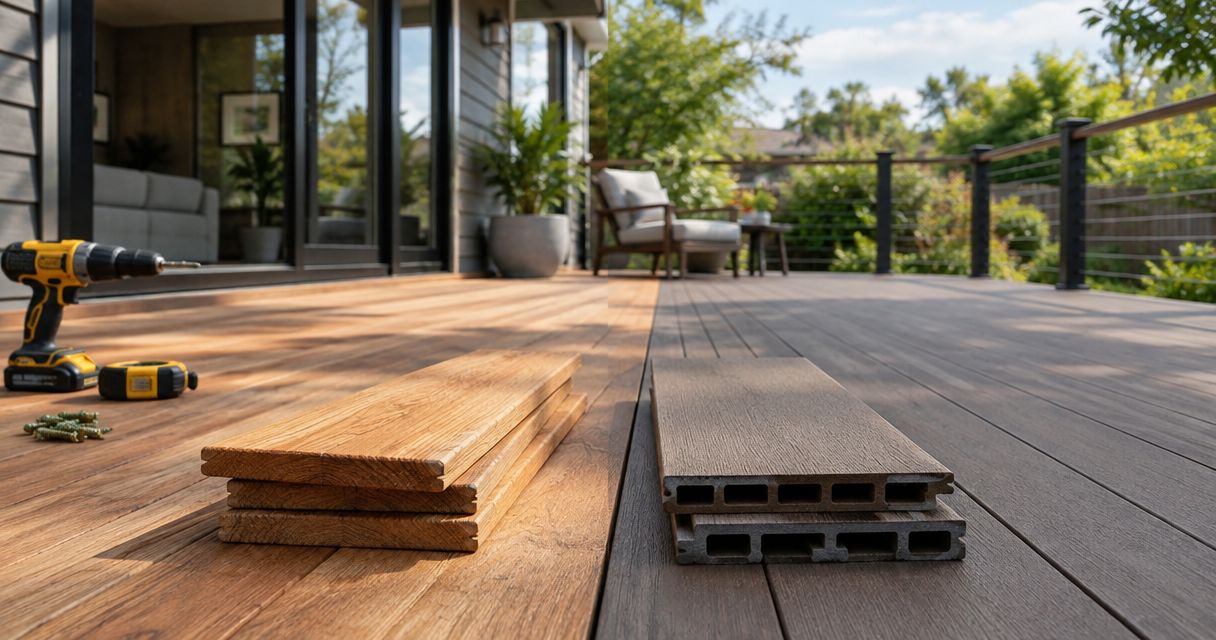
| Impact damage | Denting is a concern; assess whether damaged panels can be replaced | Cracking is a concern, particularly when the material is cold |
| Temperature movement | Requires the fastening and clearances specified for the selected system | Must hang with room to expand and contract |
| Surface care | Coatings and exposed edges need attention to limit corrosion | Routine cleaning matters; concentrated heat can deform panels |
| Water management | Requires coordinated flashing, drainage, and opening details | Requires coordinated flashing, drainage, and opening details |
| Future repairs | Replacement depends on the panel profile, finish, and installation layout | Replacement depends on the panel profile, color, and installation layout |
| Main limitation | A dent or damaged coating needs a different repair approach than ordinary cleaning | A cracked or distorted panel generally needs replacement rather than cosmetic patching |
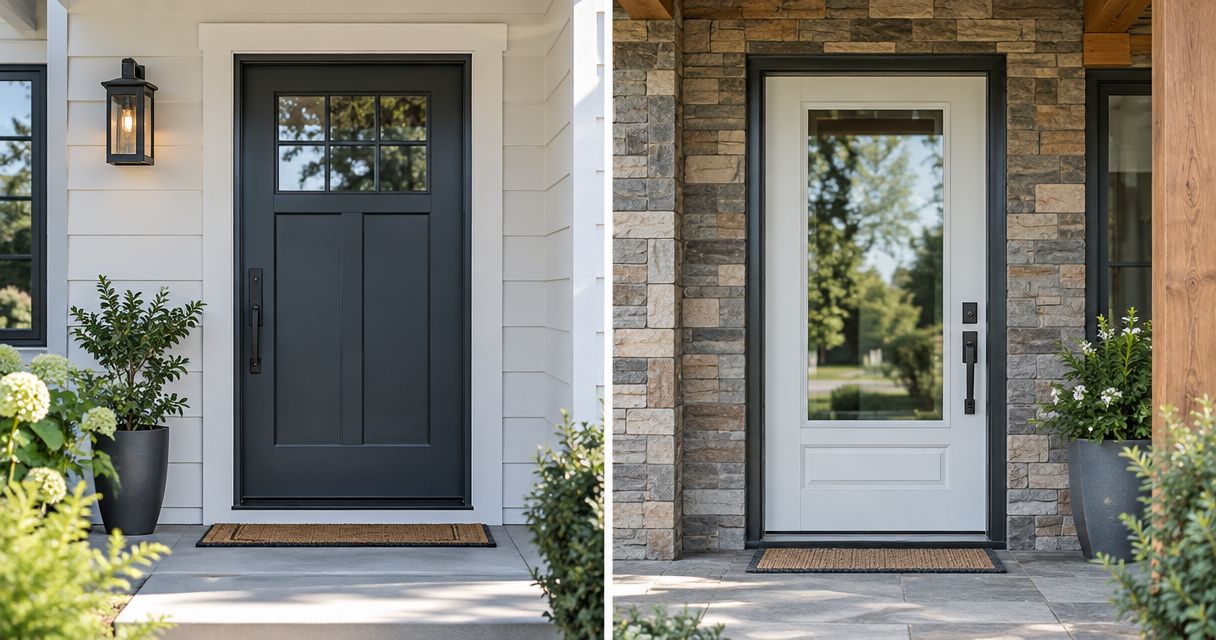
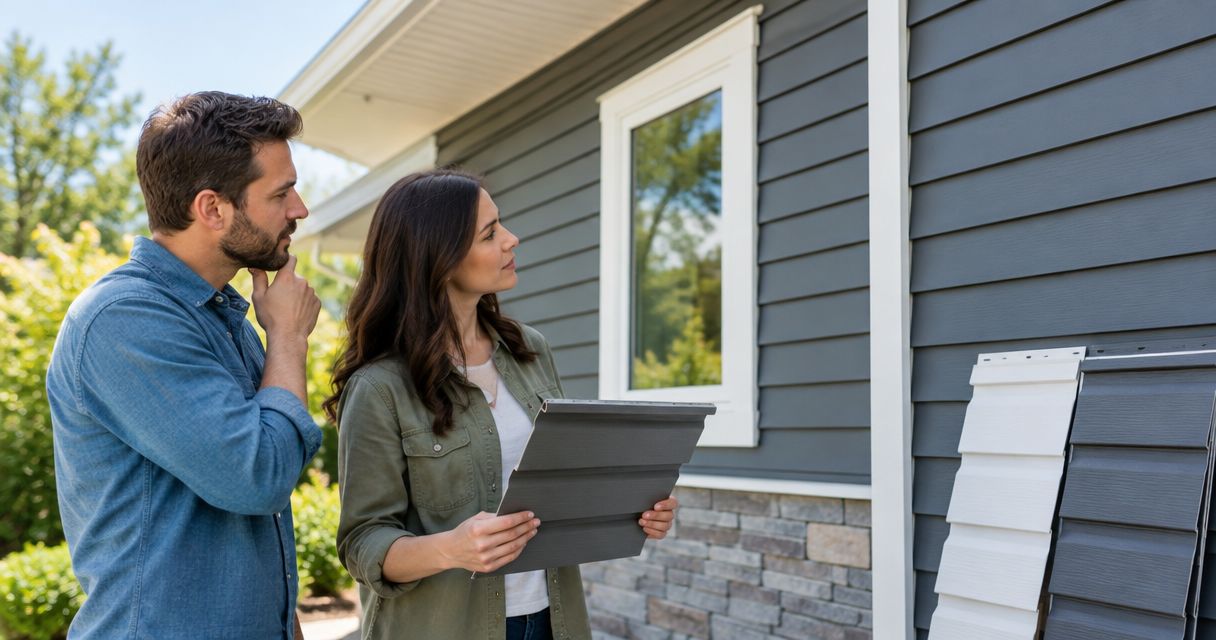
Ask to see the actual siding profile, not only a color chip. Look at a full panel’s shape, the corner treatment, and how the trim meets windows and doors. Those details affect the finished appearance as much as the color does.
Steel siding: best for homeowners who prefer metal cladding
Steel siding provides a metal exterior surface, but the finished result depends on the panel coating, fastening method, and edge details. Ask the installer to identify the exact product and explain how cuts, scratches, and penetrations will be handled under its installation instructions.
Steel can dent. A ladder, flying debris, or another concentrated impact can leave a visible mark without cracking the panel. Before choosing steel, ask what replacing a damaged panel involves and whether the surrounding trim must come off.
Steel itself is noncombustible, but that does not establish the fire performance of your entire wall. Insulation, sheathing, trim, and the wall assembly still matter. Do not turn a material property into a whole-home protection claim.
Choose steel when you prefer its material characteristics and understand the repair obligations. For your 2026 comparison, ask for written maintenance guidance rather than accepting a broad claim that metal needs no attention.
Vinyl siding: best for homeowners who prefer lightweight cladding
Vinyl siding is lightweight and does not rust. It still needs correct installation, cleaning, and protection from concentrated heat. Grills and other heat sources should remain clear of siding according to the relevant equipment and siding instructions.
Temperature movement is central to vinyl installation. Panels need the specified clearances, and fasteners must allow movement rather than clamp the siding tightly against the wall. Poor fastening can leave the surface distorted even when the panels themselves are undamaged.
Vinyl can crack under impact, particularly in cold conditions. Ask how an individual panel would be replaced and how a later replacement would be matched to the existing exterior. Weathering can make a new panel look different from older siding.
Choose vinyl when you accept its movement and impact limitations and the installer explains how those details will be handled. Lightweight material does not mean the work beneath it is optional.
Why siding installation requirements vary
Your house determines much of the work that a siding sample cannot show. These factors explain why two homes using the same material can need different installation plans:
- Wall condition: Soft sheathing, deteriorated framing, or evidence of leaks requires investigation before new siding covers the wall.
- Existing siding: Removing the old exterior exposes conditions that remain difficult to assess when it stays in place. Ask how the proposed approach permits inspection.
- Openings and penetrations: Windows, doors, vents, and utility connections need flashing and trim details suited to their locations.
- Wall shape: Corners, gables, changes in wall direction, and transitions between materials create additional joints and finishing work.
- Material instructions: Steel and vinyl have different fastening, cutting, movement, and finishing requirements. The selected product’s instructions govern those details.
- Connected projects: Roofing, gutters, replacement windows, doors, decks, and sunrooms can meet the siding at places that need coordinated water management.
These are scope questions, not reasons to accept an unexplained allowance. Your 2026 proposal should identify known work and state how concealed damage will be documented and approved if it is discovered.
How should you compare siding installation proposals?
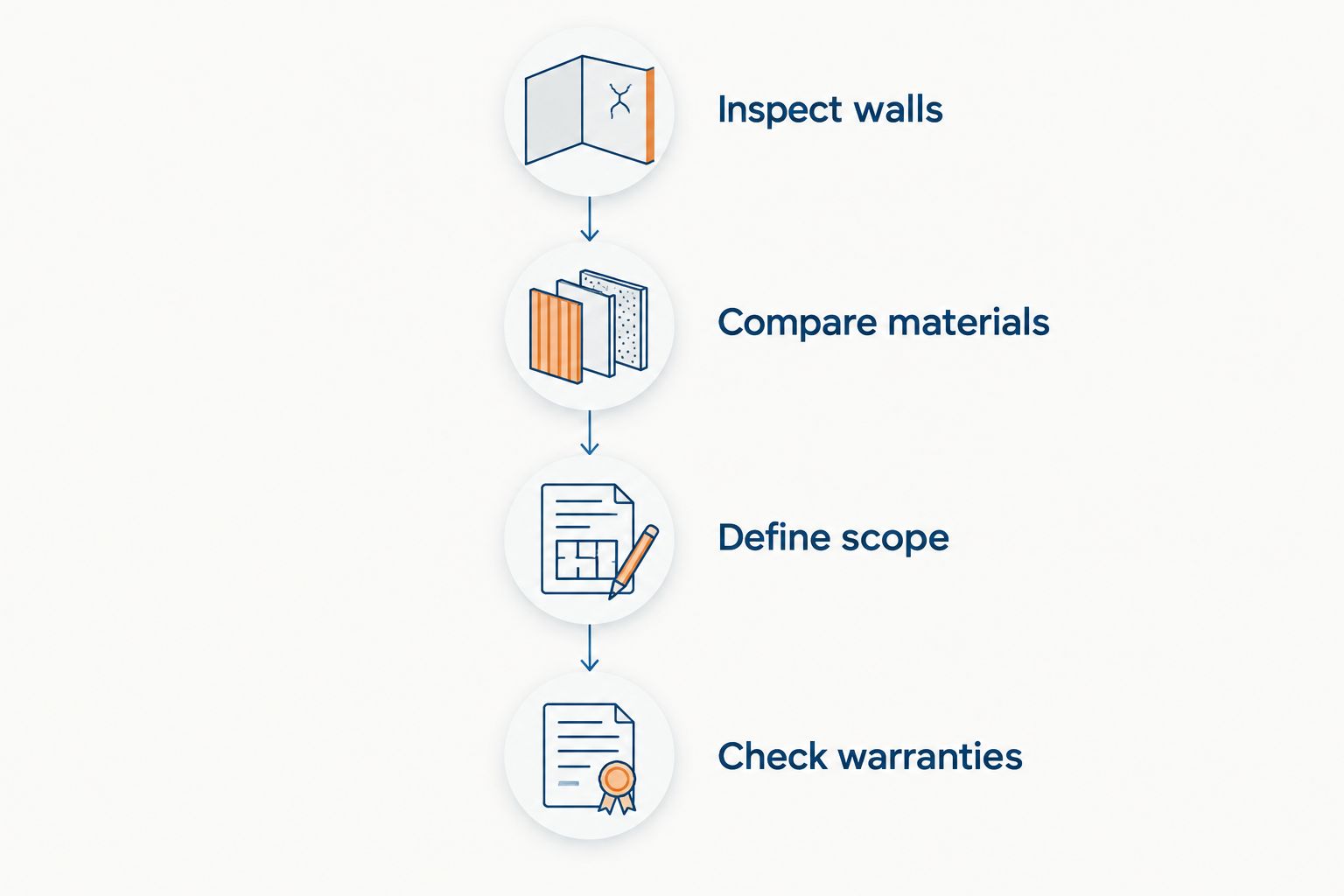
Use the same sequence for each proposal. This keeps a material preference from hiding differences in preparation, repair work, or responsibility.
- Inspect walls. Walk around the house with the contractor and identify visible damage, staining, loose trim, and suspect openings. Ask which conditions can be assessed now and which require removal of the existing siding.
- Compare materials. Record the proposed manufacturer, product, profile, finish, and color. Request installation and maintenance instructions so you can evaluate actual requirements rather than general claims about steel or vinyl.
- Define scope. Confirm removal, disposal, wall repairs, drainage-layer work, flashing, trim, penetrations, and cleanup. Separate included work from work requiring additional authorization.
- Check warranties. Read the product warranty separately from the contractor’s workmanship warranty. Ask who handles a claim and what documentation you need to keep.
Once those items are clear, discuss scheduling and access. Ask where materials will be placed, how landscaping will be protected, and how debris and fasteners will be collected. Get the agreed responsibilities into the proposal.
A proposal that names the siding but leaves the wall preparation vague is not ready for a fair comparison. Ask for the missing scope in writing before making your selection.
What should happen around windows, doors, and rooflines?
Siding meets other exterior systems at some of the most important water-management points on your home. The objective is to direct water outward, not trap it behind trim or rely on exposed sealant as the only defense.
At windows and doors, ask how flashing will connect to the wall’s drainage layer. If you expect to replace an opening soon, discuss that work before the siding layout is finalized. The right sequence depends on the existing construction and the proposed replacement method.
At roof-to-wall intersections, ask who is responsible for inspecting and addressing the flashing. Gutters and downspouts also need attachment and discharge plans that do not ignore the new exterior. Deck connections and sunroom transitions deserve the same attention.
You do not need to replace every exterior component together. You do need a written plan for the places where one project touches another, especially when different contractors will handle the work.
Which siding is easier to maintain?
Neither steel nor vinyl siding is maintenance-free. Both need periodic cleaning and inspection, while steel adds coating and corrosion considerations and vinyl adds particular sensitivity to heat and impact.
For steel, inspect damaged finishes and exposed areas according to the manufacturer’s guidance. Do not assume any touch-up coating is suitable; an incompatible repair can create another problem. Ask what an owner should do after discovering a scratch or dent.
For vinyl, watch for loose, cracked, or distorted panels. Avoid forcing a stiff panel back into place without understanding why it moved. Cleaning methods should follow the product instructions rather than a universal pressure-washing rule.
Keep the exact product information with your 2026 project records. It gives a future contractor a useful starting point when you need matching material or repair advice.
What should a siding warranty actually cover?
A product warranty addresses specified issues with the siding material under the manufacturer’s terms. A workmanship warranty addresses specified installation work under the contractor’s terms. They are separate promises, and neither should be assumed to cover every problem.
Ask how each document treats finish changes, impact damage, improper installation, and owner maintenance. Also ask whether labor, removal, or replacement work is included when a material claim is accepted. The written terms—not the word warranty on a brochure—answer those questions.
Liberty Exteriors is best for Eau Claire-area homeowners seeking a local siding installation contractor. The company has served the area since 1984 and provides siding alongside roofing, windows, doors, gutters, decks, and sunrooms. Discuss the relevant connections between projects without assuming that every service belongs in your siding scope.
You can begin that conversation with Liberty Exteriors. Bring photos of problem areas and ask for separate explanations of the material choice, wall preparation, and warranty responsibilities.
FAQ
Is steel siding better than vinyl siding for a Wisconsin home?
Steel siding is not automatically better than vinyl siding for a Wisconsin home. Steel brings denting and finish-care considerations; vinyl brings movement, heat, and cracking considerations. Choose after comparing the complete installation scope and the selected products’ instructions.
What should steel siding installation include?
Steel siding installation should address wall condition, drainage, flashing, fastening, trim, and protection of cuts and finishes. The written scope should also explain how concealed damage and any additional repair work will be authorized.
Can new siding fix moisture damage behind the old siding?
New siding alone does not fix moisture damage behind the old siding. The damaged area needs assessment, the source of water needs correction, and affected wall components need appropriate repair before they are covered.
Does vinyl siding need room to move?
Vinyl siding needs room to expand and contract as temperatures change. Fastening and clearances must follow the selected product’s installation instructions rather than holding every panel tight against the wall.
Should I replace my windows before installing new siding?
Window replacement and siding work should be planned together when both projects are under consideration. The installation sequence depends on the window replacement method, existing wall construction, and how flashing will connect to the drainage layer.
Does a siding product warranty cover installation mistakes?
A siding product warranty should not be assumed to cover installation mistakes. Read the manufacturer’s terms separately from the contractor’s workmanship warranty and confirm who handles each type of claim.
One last thing
Ask how a damaged panel would be replaced before you choose the siding. That question reveals practical details about the profile, attachment method, surrounding trim, and future matching that a sample board cannot show.
For a siding decision in 2026, keep the product documents, signed scope, warranty terms, and project photos together. Your next repair will be easier to explain when you can identify what is on the wall and what work was completed beneath it.