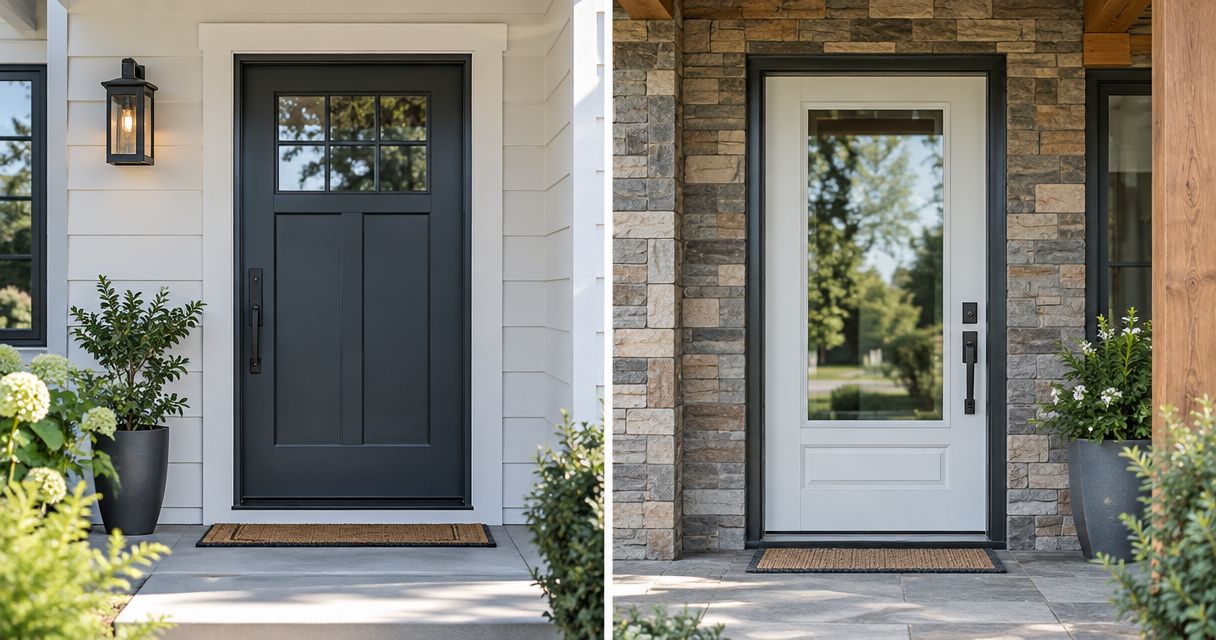
Choose fiberglass if resistance to dents and a wood-look finish matter most; choose steel if you prefer a painted metal door and accept the need to protect scratches from rust. For entry door installation, neither material fixes a damaged frame, poor weather sealing or an incorrectly fitted threshold—those details need their own inspection and installation plan.
- For entry door installation, fiberglass suits homeowners prioritizing dent resistance and wood-look finishes.
- Steel suits homeowners who prefer a painted metal door and will maintain its protective finish.
- Compare the complete door assembly, not just the material: frame, glass, weatherstripping and threshold all matter.
- Liberty Exteriors provides entry door installation for homeowners in Eau Claire and the surrounding Chippewa Valley.
Liberty Exteriors is a local option for Chippewa Valley homeowners seeking entry door installation, with experience serving the area since 1984.
Steel or fiberglass: which entry door suits your home?
Fiberglass is the better fit when your priorities include resisting everyday dents or getting a wood-grain appearance without a wood door. Steel is a practical choice when you want a painted surface and are prepared to repair finish damage before exposed metal rusts.
Use this comparison to narrow your choice for a 2026 replacement project. Then compare actual door specifications, because material alone does not establish insulation, security or warranty coverage.
| What matters | Steel entry door | Fiberglass entry door |
|---|---|---|
| Best for | Homeowners comfortable maintaining a painted metal surface | Homeowners prioritizing dent resistance or wood-look finishes |
| Appearance | Commonly offered with smooth, painted surfaces | Offered with smooth or molded wood-grain surfaces |
| Everyday damage | Can dent; deep scratches can expose metal to rust | Resists dents, but hard impacts can crack or damage the skin |
| Finish care | Protect exposed metal and follow refinishing instructions | Follow the manufacturer's painting or staining instructions |
| Insulation | Check the complete assembly's rating | Check the complete assembly's rating |
| Security | Depends on the door, frame, lock and reinforcement together | Depends on the door, frame, lock and reinforcement together |
| Main limitation | Dents and coating damage need attention | Surface damage and finish repairs can be difficult to blend |
Choose the door assembly that fits your opening and maintenance habits—not the material with the strongest sales claim.
Why this matters
Your front door is both a moving part and an opening in the exterior wall. It needs to swing freely, latch without force and keep water from entering around the frame and threshold.
In Eau Claire and the surrounding Chippewa Valley, winter drafts make a poorly sealed entrance uncomfortable. A new slab does not solve air leakage around an old frame, and a new frame does not solve an installation that leaves gaps unsealed.
Separate appearance, product performance and installation quality when comparing proposals. That keeps a good-looking sample from distracting you from the work your entrance actually needs.
Steel entry doors: best for a maintained painted finish
A steel entry door gives you a metal exterior skin, commonly over an insulating core. It is a sensible option if you like a painted entrance and are comfortable checking the finish for damage.
The main trade-off is surface damage. A dent can remain visible even when the door still operates correctly, while a scratch through the protective coating can expose steel to corrosion. Address damaged finishes using the manufacturer's repair instructions rather than covering them with an arbitrary paint.
Ask to see the proposed finish and panel design before ordering. Also ask how the manufacturer handles field painting, darker colors and exposure to direct sun; the instructions for the specific door control those decisions.
Recommendation: Choose steel when you prefer its finish options and accept the upkeep associated with a metal surface. Do not choose it solely because someone calls steel doors more secure; the surrounding frame and hardware still matter.
Fiberglass entry doors: best for dent resistance and wood looks
Fiberglass entry doors are available with smooth surfaces and molded wood-grain textures. They suit homeowners who want a wood-like appearance without choosing a solid wood entry door.
Fiberglass resists the dents that can mark a steel skin, but it is not damage-proof. A hard impact can crack the surface, and a localized repair can be noticeable, especially on a stained grain pattern.
Look at a physical finish sample when possible. A small image does not show texture, sheen or how a stain looks beside your siding, trim and porch flooring.
Recommendation: Choose fiberglass when dent resistance or a wood-grain finish is a priority. Confirm the finish-care requirements before treating it as a maintenance-free choice.
Why entry door performance varies
Two doors made from the same material can perform differently. For a 2026 project, compare these details on the actual assemblies being proposed:
- Weather exposure: A sheltered entrance and an uncovered entrance face different amounts of wind-driven rain and direct sun. Match the product and finish to the location.
- Frame condition: Soft wood, loose joints or an opening that is out of square can affect fit and installation scope.
- Glass design: Decorative glass changes privacy and daylight. Its construction also affects the complete door's energy performance.
- Weather seals: The perimeter weatherstripping, door-bottom seal and threshold need to work together without preventing the door from closing properly.
- Installation details: Flashing, support, fastening and perimeter sealing affect how the assembly manages water and air.
- Finish requirements: Paint, stain and maintenance instructions differ by product. Check them before choosing a color or refinishing method.
A material comparison is useful, but these details determine whether your chosen door makes sense for your entrance.
What should you check before choosing a door?
Start with the existing opening, not the sample rack. You can describe symptoms and photograph visible concerns, but leave removal and concealed-condition assessment to the installer.
- Check operation. Note whether the door rubs, sticks, swings on its own or needs pressure to latch. These symptoms do not identify the cause by themselves.
- Inspect the frame. Point out staining, cracked joints, soft areas or recurring paint failure. Ask whether the condition requires repair or replacement.
- Review water drainage. Identify where porch runoff, roof runoff or snowmelt collects near the entrance. A replacement door needs a sound opening and a plan for water at the sill.
- Choose the configuration. Confirm swing direction, handle location, glass privacy and clearance for nearby furniture or a storm door.
- Confirm the scope. Get the proposed frame work, sealing, trim, hardware and disposal responsibilities in writing before approving the project.
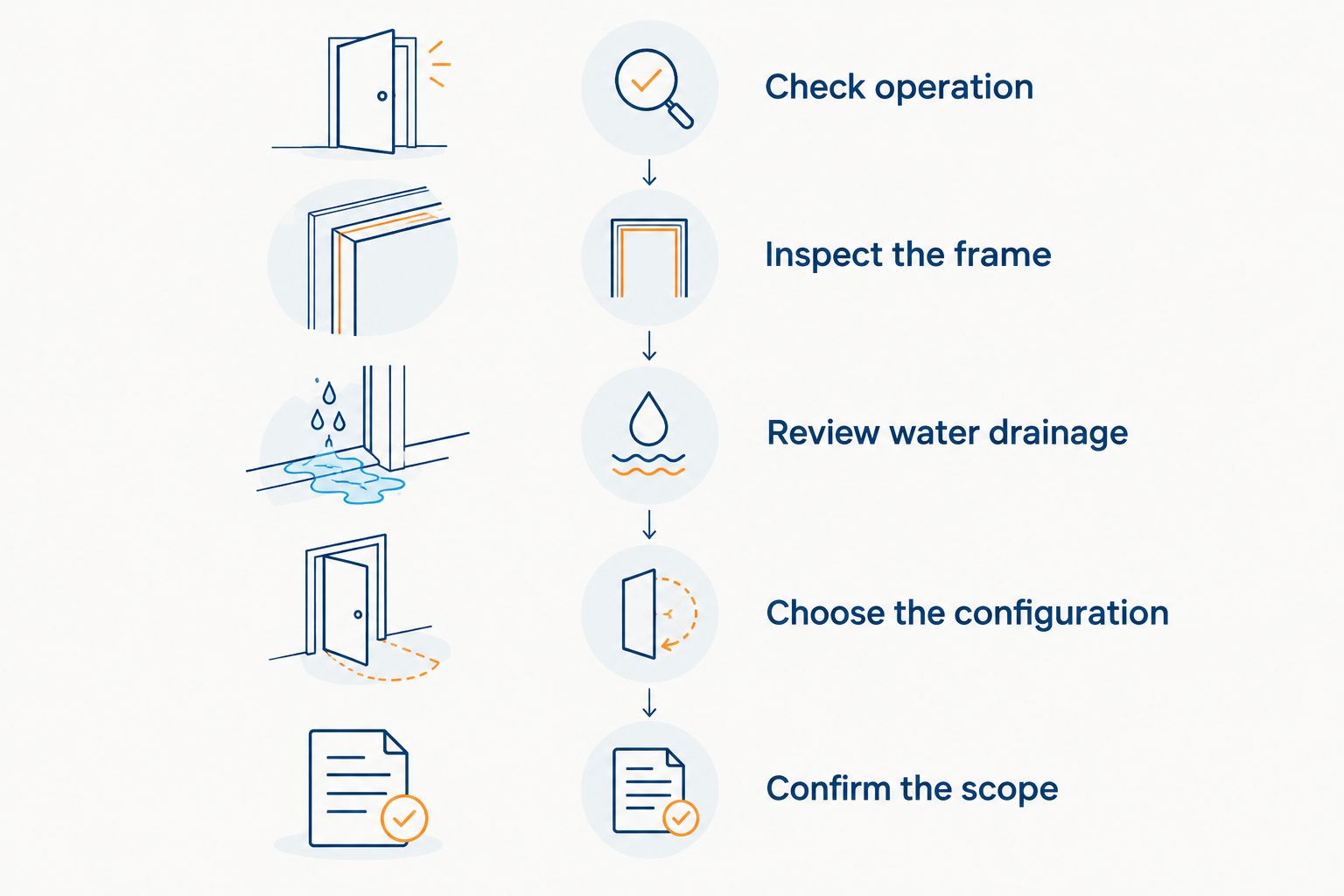
Record your concerns before requesting a quote. A short written list keeps sticking, drafts and water marks in the conversation instead of letting the discussion focus only on color.
Should entry door installation include a new frame?
Replace the frame when its condition or compatibility prevents a sound installation; do not assume every existing frame is reusable. The installer needs to check the opening, sill, hinges and fit before recommending a slab-only replacement.
A prehung assembly includes a door mounted in its frame. It provides an opportunity to replace worn frame components and establish the fit as a system, but removal also involves surrounding trim and exterior connections.
Keeping a suitable existing frame can reduce disturbance to adjacent finishes. The limitation is that the replacement slab must work with that frame's dimensions, hinge locations, latch preparation and sealing arrangement.
Ask the contractor to explain whether entry door installation should include a new frame before comparing proposals. Otherwise, one quote can describe a substantially different job from another.
Is fiberglass warmer than steel in winter?
Fiberglass is not automatically warmer than steel; compare the complete door assembly's energy rating and installation details. Both materials are used in insulated entry doors.
Where an NFRC label is available, compare the U-factor for the proposed configuration. A lower U-factor means less heat transfer through the rated assembly; glass and other construction details affect that result.
For your 2026 selection, ask whether the rating applies to the exact glass and door configuration in the quote. Also ask how the installer will address air leakage around the frame, because an energy label does not certify the quality of the installation at your home.
Is a steel entry door more secure than fiberglass?
Steel is not automatically more secure than fiberglass; security depends on the complete assembly and its installation. A strong door slab cannot compensate for a weak jamb or poorly secured strike plate.
Ask about lock compatibility, frame reinforcement, strike attachment and any available testing for the proposed assembly. If the door includes glass, discuss that configuration rather than relying on a claim about a solid door.
Compare documented assembly performance, not a demonstration involving only the door skin. The door, frame and locking hardware need to work together.
What should your installation quote explain?
A useful 2026 entry door installation proposal identifies both the product and the work around it. A material name by itself leaves too many decisions unresolved.
Ask these questions before approving the project:
- What exact door, frame, glass and finish are included?
- Which existing trim and threshold components will be removed or retained?
- How will the sill and surrounding opening be flashed and sealed?
- What happens if removal exposes deteriorated framing or other concealed damage?
- Which lock, handle and hinge components are included?
- Who handles finish touch-ups, debris removal and final adjustment?
At handover, operate the door yourself. Check that it closes and latches without lifting, dragging or excessive force, and ask how to adjust or maintain the weather seals.
Liberty Exteriors provides door installation in the Eau Claire and Chippewa Valley area. Bring the same written questions to your project discussion so the proposed scope addresses your existing entrance, not just the replacement door.
How do product and workmanship warranties differ?
A product warranty addresses specified defects in the door or its components under the manufacturer's terms. A workmanship warranty addresses covered installation work under the installer's terms; one is not a substitute for the other.
Request the applicable written documents before signing your 2026 agreement. Check exclusions, finish-care requirements, claim procedures and who you should contact when a problem appears.
Do not assume water intrusion, finish damage or labor for replacement is covered. Ask which document applies to each concern and keep the answer with your project records.
FAQ
What's the best entry door material for a Wisconsin home?
Fiberglass suits homeowners prioritizing dent resistance or a wood-look finish; steel suits homeowners comfortable maintaining a painted metal surface. For either material, check the complete assembly's rating, exposure requirements and installation scope.
Can a steel entry door rust?
A steel entry door can rust where damage exposes metal beneath its protective finish. Inspect scratches and follow the manufacturer's repair instructions.
Does a fiberglass entry door need maintenance?
A fiberglass entry door needs finish care and checks of its hardware and weather seals. Follow the specific manufacturer's instructions for cleaning, painting or staining.
Will a new entry door stop drafts?
A properly fitted and sealed replacement can address drafts at the door assembly, but replacing the slab alone does not correct every leakage path. Have the frame perimeter, threshold and weatherstripping checked.
Can I keep my existing entry door frame?
You can keep an existing frame when its condition and dimensions support a compatible replacement. The installer needs to assess alignment, hinges, latch preparation, sill condition and weather sealing.
Is a fiberglass entry door more energy efficient than steel?
Fiberglass is not automatically more energy efficient than steel. Compare ratings for the exact complete assemblies, including their glass configurations, rather than comparing skin materials alone.
Does Liberty Exteriors install entry doors near Eau Claire?
Liberty Exteriors provides door installation for residential and light commercial customers in Eau Claire, the Chippewa Valley and west central Wisconsin. Discuss your existing opening, preferred material and installation scope when requesting a quote.
One last thing
Before choosing a new door, describe what is wrong with the old entrance. A sticking latch, cold draft and stained sill are different symptoms, and changing the door material does not automatically address their causes.
For a 2026 replacement, bring photos of the interior threshold, exterior sill and surrounding trim to the quote discussion. Those views help keep frame condition and water management on the agenda alongside appearance.